
Best Vox-Style Explainer Tool for Fintech
The best vox-style explainer tool for fintech turns abstract concepts and product flows into cutout diagrams and arrows, with approve-first boards for compliance.
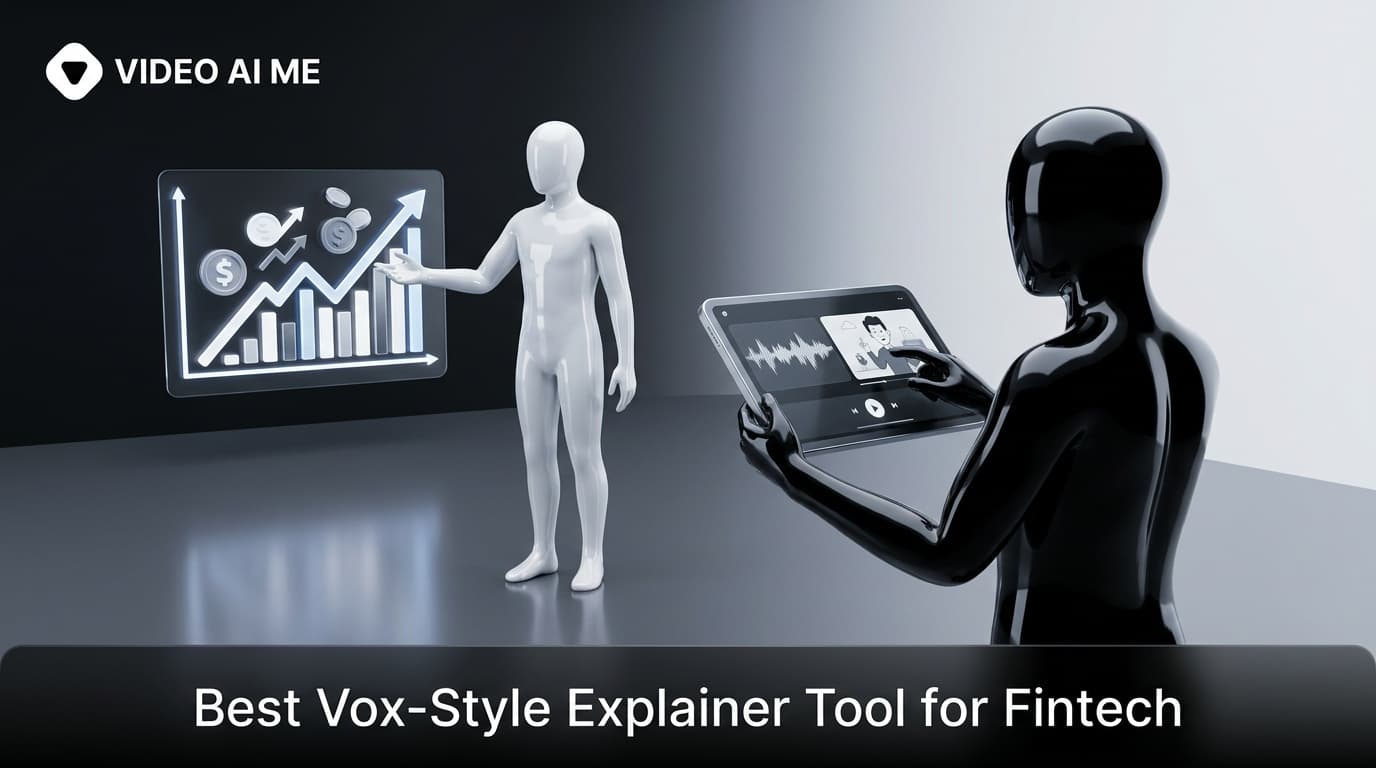
Fintech has a teaching problem. Your product is built on abstract ideas, compounding, APR, spread, escrow, a multi-step payment flow, and abstract ideas do not film well. A screen recording shows the buttons but not the concept, and a talking head narrating a whitepaper loses people in the first ten seconds. This is why a good vox-style explainer tool for fintech is quietly one of the best acquisition assets a finance brand can build. The editorial, paper-collage format was practically designed for abstract explanation: cutout diagrams, hand-drawn arrows, and calm narration that turns a fuzzy financial concept into something a viewer can actually follow. This guide covers why the format fits finance, what to look for in a tool, and the one we would pick.
The vox-style explainer, named after the newsroom explainer videos that made the look famous, uses torn construction-paper textures, hand-cut illustrations, cutout typography, and hand-drawn arrows over a measured voiceover. It reads as journalism, not as a pitch. For a category where trust is the entire product, that editorial register is a strategic advantage before you have said a single word about your app.
Why abstract finance is the perfect job for vox-style
Most video formats are good at showing things that exist in the physical world. Fintech mostly does not. Interest compounding over thirty years, the difference between APR and APY, how money moves through an escrow account, why a spread exists: these are relationships and processes, not objects. The one visual language that is genuinely built for relationships and processes is the diagram, and the vox-style format is a diagram that moves and talks.
Watch how the format handles abstraction. A paper coin becomes a stack, an arrow curves up and to the right, a label reads "compounding," and a second smaller stack sits beside it labeled "simple interest" for contrast. In fifteen seconds a viewer understands a concept that a paragraph of copy would fumble. That is the exact strength Vox built its explainer reputation on, and it transfers directly to financial products.
The tone is the other half of the advantage. Finance buyers are, correctly, skeptical. An ad that behaves like an ad triggers that skepticism instantly. An explainer that behaves like a patient, well-designed lesson does the opposite: it earns credibility by teaching first and selling last. In a regulated, trust-sensitive category, sounding like a helpful newsroom rather than a hype machine is not just nicer, it converts the kind of customer who reads the fine print.
What to look for in a vox-style explainer tool for fintech
A vox-style explainer tool for fintech has to do more than make pretty paper art. Here is the checklist that matters for a finance brand.
| Criteria | Why it matters for a fintech brand | What good looks like |
|---|---|---|
| Diagram-friendly visuals | Your ideas are relationships, arrows, and flows | Hand-drawn arrows, labels, and cutout charts, not stock office footage |
| Approve before you render | Every financial statement needs review before it ships | You approve each board and its narration before any video credit is spent |
| Narration built in | The concept is carried by a clear, measured voiceover | Script and narrator voice generated together and synced to the visuals |
| Product-image reference | App screens and cards should be recognizable | Upload a screenshot or product photo the tool keeps consistent across scenes |
| Faceless option | Many finance brands prefer no on-screen presenter | Fully faceless mode, with an optional paper-cutout mascot |
| Vertical and horizontal | Reels, TikTok, and YouTube each want a different frame | Native 9:16 and 16:9 export |
The two that carry the most weight for fintech are diagram-friendly visuals and approve-before-you-render. If the tool cannot draw a clean arrow-and-label diagram, it cannot do the one job you actually need. And in a category where compliance and legal review are non-negotiable, being able to sign off on the exact narration and every on-screen figure as a still, before a single credit is spent, is what makes the tool usable inside a real finance team.
The best vox-style explainer tool for fintech in 2026
Our pick is the Vox-Style Explainer template in VIDEO AI ME. You give it a short brief: the product name, what the explainer should say, an optional product photo or screenshot, an optional character image, and a narrator voice. It writes a scene-by-scene narrated script, generates one paper-collage board per scene that you approve before any video credits are spent, then animates each approved board into a cutout clip with the narration and sound baked in, and cuts them into one finished ad.
For fintech, the approve-each-board flow is the feature that makes it viable. You review each diagram and the exact narration as a still, route it through whoever needs to sign off, and only then spend on rendering. The format's native language, arrows, labels, and cutout charts, is a natural fit for financial concepts and product flows. And the faceless default suits the many finance brands that would rather not put a presenter on camera. Output is short, roughly ten to forty seconds, vertical or horizontal, with narration and sound generated automatically, so it drops straight into a paid or organic feed.
The fintech workflow, step by step
- Write the brief. Name the product and the single concept or flow you want to explain (for example, "how our round-up feature invests spare change"), and upload a screenshot if a screen matters.
- Let it script the scenes. The template drafts a scene-by-scene narrated script: hook, the confusing status quo, the concept made simple, and a soft call to action.
- Approve the boards and the words. Review each diagram board and its narration as a still. This is your compliance and legal checkpoint. Edit any figure or wording before a video credit is used.
- Animate and narrate. Approved boards become cutout clips with the voiceover and sound baked in.
- Export and test. Pull the vertical cut for Reels and TikTok, the horizontal for YouTube, and ship a few hook variations.
To try it on your own concept, open the Vox-Style Explainer template and start from the one idea your customers most often get wrong. It sits with the other guided pipelines in the Templates gallery.
Turning an abstract concept into cutout diagrams and arrows
This is the format's superpower for finance, so it is worth being concrete. The move is always the same: find the relationship at the heart of the concept, then draw it.
Explaining compounding? Two paper stacks side by side, one growing on a curve labeled "compound," one on a flat line labeled "simple," with a hand-drawn arrow marking the widening gap over time. Explaining a payment flow? Paper cards and arrows tracing money from the buyer, through your product, to the seller, with a labeled box for the step your product owns. Explaining APR versus a teaser rate? A paper calendar with the rate shifting and an arrow calling out when. Each of these is a diagram a designer would take a day to storyboard and animate, and the template drafts it from a sentence.
Because the visuals are illustrated rather than filmed, you are also free to show flows you could never capture on camera, like money moving between accounts, without a screen recording that reveals sensitive UI. You control exactly what each figure says, which is precisely the control a regulated brand needs.
Explaining a product flow without a screen recording
Screen recordings are the default for fintech demos, and they are often the wrong tool. A raw recording shows every button, most of which are noise, and it dates the moment your UI changes. A vox-style explainer abstracts the flow to the three or four steps that actually matter, which is both clearer for the viewer and far more durable for you.
If a specific screen does matter, the product-image reference lets you bring it in: upload a screenshot and the template keeps that screen recognizable as a paper element inside the diagram, so you get the recognition of your real interface without the clutter of a full walkthrough. For finance professionals who sell trust one relationship at a time, our guide to AI video for mortgage brokers and financial advisors covers the adjacent talking-head lane, and the two formats pair well: the explainer teaches the concept, the personal video builds the relationship.
Keeping it credible for a regulated audience
Editorial credibility is the whole reason to use this format in finance, so protect it. Keep the narration precise and supportable, avoid implied guarantees of returns, and make sure any figure on screen is one your compliance team has cleared. The approve-each-board step exists for exactly this: it is a still, reviewable draft of every claim and every number before anything renders.
The same discipline applies whether you are explaining a savings product, a trading feature, or a lending flow. For the investing and trading angle specifically, our UGC guide for trading and investing AI video covers the claim discipline and disclosure habits that carry straight over to a vox-style explainer. Teach honestly, cite carefully, and let the clarity do the persuading.
Where fintech vox-style explainers fit
The explainer is the teaching layer of your content, not the whole thing. Here is how it slots in against the other formats a fintech brand runs.
| Format | What it is best at | When to reach for it |
|---|---|---|
| Founder or advisor video | Trust, relationship, personality | Warm audiences and high-consideration products |
| Vox-style explainer | Making an abstract concept or flow clear | The "wait, how does this actually work" moment |
| Screen demo | Showing the literal interface | Onboarding and post-signup, not cold ads |
Because a single concept explainer is reusable across the funnel, from a cold ad hook to an onboarding tooltip, it tends to earn its keep faster than most creative. If your broader product is software, the sibling guide to the best vox-style explainer tool for SaaS covers the wider software playbook, and if you are new to the format itself, the primer on what a vox-style video is is the fastest way to get oriented.
Final word
Fintech is arguably the best-fit category of all for the vox-style explainer, because your product is made of abstract ideas and abstract ideas are exactly what cutout diagrams and arrows were built to explain. The format turns compounding, APR, and multi-step flows into pictures a viewer can follow in fifteen seconds, in an editorial voice that earns the trust a finance brand lives on. The approve-each-board step gives compliance a real checkpoint, and the illustrated approach lets you explain flows you could never film.
When you are ready, build your first fintech vox-style explainer. Bring the one concept your customers most often misunderstand, and let the template turn it into a scene-by-scene, narrated, ready-to-post explainer.
Frequently Asked Questions
Share
AI Summary

Paul Grisel
Paul Grisel is the founder of VIDEOAI.ME, dedicated to empowering creators and entrepreneurs with innovative AI-powered video solutions.
@grsl_frReady to Create Professional AI Videos?
Join thousands of entrepreneurs and creators who use VIDEO AI ME to produce stunning videos in minutes, not hours.
- Create professional videos in under 5 minutes
- No video skills experience required, No camera needed
- Hyper-realistic actors that look and sound like real people
Get your first video in minutes
Related Articles
MiniMax H3 for Founders Making Their Own Ads
You have no crew, no budget for one and limited patience. How to produce your own video ads without appearing on camera or learning an editing suite.
Best Vox-Style Explainer Tool for Startups
The best vox-style explainer tool for startups makes cheap, fast editorial explainers for launch, waitlist, and fundraising, with no designer and approve-before-spend.

Best Vox-Style Explainer Tool for SaaS (2026)
The best vox-style explainer tool for SaaS explains an invisible product in 30 seconds. Here are the buying criteria, a comparison table, and where VIDEO AI ME fits.