
How to Make an Investor Pitch Video With AI (2026)
Learn how to make an investor pitch video with AI in 2026. A step-by-step VC-facing workflow to script, generate, and send a 90-second pitch that lands meetings.
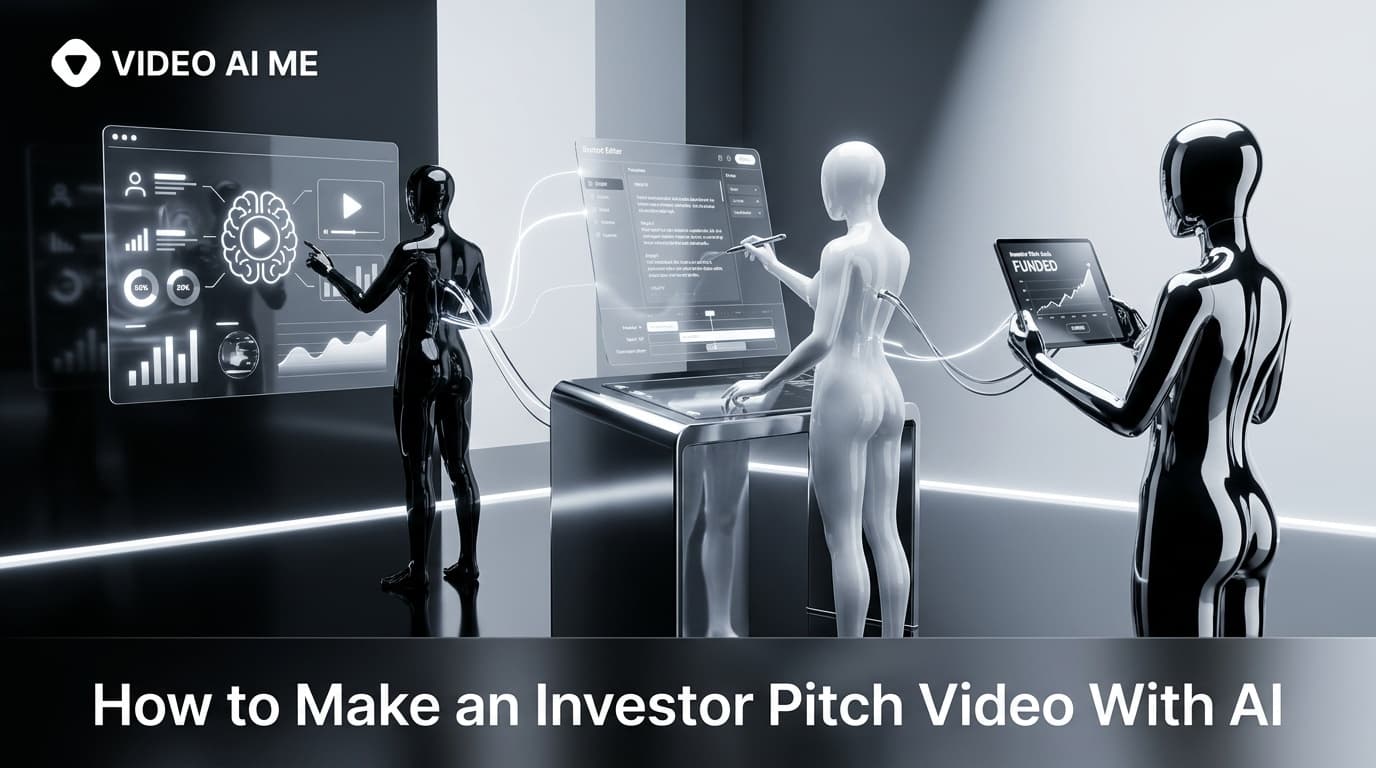
An investor pitch video ai workflow can turn a static deck and a nervous founder into a tight, confident 90-second story that VCs actually finish watching. Investors scroll through dozens of cold emails and warm intros every week, and the founder who grabs attention in the first few seconds wins the meeting. This guide walks through how to make an investor pitch video with AI, step by step, with no film crew, no studio, and no awkward webcam takes.
Unlike a crowdfunding teaser aimed at the public, a VC-facing pitch video has one job: get a partner to reply, take the call, or move you to the next stage. The bar is different. The story has to be sharp, the numbers have to land, and you have to look like someone who can run a company. Below is exactly how to build that with AI tools.
What an Investor Pitch Video Actually Needs
Before you touch any tool, understand what a VC is scoring while they watch. A pitch video for investors is not a product demo and it is not a hype reel. It is a compressed argument that you are worth a meeting.
Investors are looking for four things, fast:
- A real problem that a specific group of people feels painfully today
- Your solution and why it is meaningfully better, not just different
- Traction or evidence that the market wants it (users, revenue, waitlist, pilots)
- The team and why you are the right people to win
The consensus across pitch coaches and investor-facing video studios is to keep it short. Most effective startup pitch videos run between 60 and 120 seconds, long enough to explain the idea and short enough to hold attention. According to FasterCapital, a startup pitch video is generally between 30 seconds and two minutes long, because angels have grown used to sound-bite style videos that make the main points in a few short minutes. Anything past three minutes and you are betting on patience you have not earned yet.
That short runtime is exactly why an AI workflow helps. You are not producing a documentary. You are producing a clean, well-paced talking-head argument with supporting visuals, and AI lets you redo it as many times as it takes to get the story tight.
Why Use AI for an Investor Pitch Video
Founders avoid pitch videos for three reasons: they hate being on camera, they have no budget for a production crew, and they cannot iterate quickly when the story changes. AI removes all three blockers.
With an investor pitch video ai approach you can:
- Generate a polished spokesperson from a single photo, so a camera-shy founder still appears on screen
- Rewrite the script and regenerate the video in minutes when an advisor gives feedback
- Produce multiple versions for different investors (seed vs. Series A framing) without reshooting
- Add clean captions, since many partners watch with sound off on the first pass
The cost difference is real. AI UGC and avatar tools cut production cost roughly in half versus hiring creators or a video team, while letting you create dozens of variations in hours rather than weeks. Video keeps gaining ground as a format investors and buyers expect, and HubSpot marketing research consistently ranks short-form video among the highest-ROI content formats marketers use. For a founder testing how their story lands with different funds, that iteration speed is the whole point.
If you want the deeper case for putting founders on camera with AI, see our guide on AI founder videos for startups and personal branding.
How to Make an Investor Pitch Video With AI: Step by Step
Here is the full workflow, from blank page to a video you can send a partner. Follow the numbered steps in order.
Step 1: Write the script before you open any tool
A great tool cannot save a weak script. Draft your narration first, aiming for roughly 150 to 200 words for a 90-second video (people speak around 130 to 150 words per minute).
Use this structure:
- Hook (0 to 8 seconds): State the problem or a surprising number. Do not open with "Hi, my name is."
- Problem (8 to 25 seconds): Who hurts, how often, and what it costs them.
- Solution (25 to 50 seconds): What you built and the one reason it is better.
- Traction (50 to 75 seconds): The single most credible proof point you have.
- Ask and team (75 to 90 seconds): How much you are raising, what it unlocks, and why you.
Write it the way you talk. Read it aloud and cut every sentence a real person would not say out loud.
Step 2: Choose your on-screen presenter
You have two options. Use a video AI tool to either turn your own photo into a talking presenter, or pick a professional AI actor to deliver the script.
For investor videos, most founders should appear as themselves. VCs invest in people, and seeing the actual founder builds trust. Upload a clear, well-lit headshot and let a video AI tool build a lip-synced talking version of you. If you want to understand how photo-to-presenter generation works under the hood, our AI avatars complete guide breaks down the options.
If you genuinely cannot be on camera, a clean professional AI actor is acceptable for the framing and product portions, but try to put the real founder in at least the ask.
Step 3: Generate the talking-head video
Paste your script, select your presenter, and generate. The tool produces a lip-synced, natural-looking talking video. Review it for:
- Pacing that does not feel rushed or robotic
- Natural pauses at the end of each section
- Tone that reads as confident, not salesy
If a section feels off, edit just that line of the script and regenerate. This is where AI beats traditional video: a reshoot is one click, not another day of filming.
Step 4: Add supporting visuals and data
Investors want to see the numbers, not just hear them. Layer in:
- A simple chart for your traction (growth curve, revenue, retention)
- A few clean product screenshots or a short screen capture
- Your logo and a one-line value proposition on screen
Keep text on screen short. The video carries the story; the visuals reinforce one number at a time.
Step 5: Add captions and clean audio
Add auto-generated captions. Many partners watch the first pass muted, so captions are not optional for a pitch video. Make sure the AI voiceover or your narration is clear and free of filler.
Step 6: Export, test, and send
Export in high resolution (1080p minimum). Before sending to a fund:
- Show it to two or three people outside your company and ask what the product does
- If they cannot answer in one sentence, your script, not your video, needs another pass
- Send it as a link, not a heavy attachment, so you can track views
A Quick Comparison: AI vs. Traditional Pitch Video Production
| Factor | Traditional production | AI pitch video |
|---|---|---|
| Time to first cut | Days to weeks | Under an hour |
| Cost | Crew, studio, editing fees | Fraction of the cost |
| Reshoots | Schedule and pay again | Edit script, regenerate |
| Versions per investor | Rarely feasible | Easy to create many |
| Camera-shy founder | A real blocker | Solved with photo to avatar |
The traditional route still wins on raw cinematic polish for a Series B brand film. For an early-stage founder who needs to get a story in front of partners this week, the AI workflow is faster, cheaper, and infinitely more iterable.
How to Tailor One Pitch Video for Different Investors
One underused advantage of an AI workflow is that you are never locked into a single cut. The same core script can be re-pointed for very different conversations, and because regenerating is cheap, you can ship a version tuned to each fund instead of one generic file for everyone.
A few framings worth producing:
- Seed version: Lead harder on the problem and the team. At seed, partners are buying a founder and a vision more than a P&L, so the traction section can be lighter and the conviction heavier.
- Series A version: Front-load metrics. Growth rate, retention, and revenue belong in the first 30 seconds because the bar is now evidence, not promise.
- Strategic or angel version: Emphasize the wedge and the unfair advantage. Angels and operators often respond to a sharp insight more than a polished number.
To build these without rewriting from scratch, keep your master script in a document with the variable lines marked. Swap the traction paragraph and the ask, regenerate, and you have a fund-specific video in minutes. This is also where short-form skills carry over directly. If you already make vertical content, our Instagram Reels AI video guide covers the same hook-first pacing that keeps a pitch video tight.
A practical rule: never send the exact same video to two partners at the same firm without checking which thesis each one backs. A 20-second edit that speaks to their portfolio focus signals that you did your homework, and investors notice the founders who clearly did.
Common Mistakes That Kill an Investor Pitch Video
Even with the right tools, these errors sink otherwise good videos:
- Burying the problem. If a partner does not understand the pain in the first 15 seconds, they stop watching.
- Listing features instead of outcomes. Investors care about the wedge and the market, not your settings menu.
- No real traction shown. "We are pre-launch" is fine, but show the waitlist, the pilots, or the letters of intent.
- Going long. Past two to three minutes, you are losing the very partners you want.
- A generic, AI-sounding script. The tool makes the video. You still have to make the story human.
For a broader breakdown of pre-launch founder storytelling, including the difference between a public teaser and a private investor ask, our AI crowdfunding pitch video guide covers the public-facing side, while this article stays focused on the VC audience.
How VIDEO AI ME Fits the Investor Pitch Workflow
VIDEO AI ME is built for exactly this kind of fast, founder-led video. You can turn a single photo into a talking spokesperson, script every word, regenerate as your story sharpens, and export a clean, captioned video without a crew.
Because the underlying generation provider handles the lip-sync and rendering, you focus only on the part that matters: the story and the numbers. Want to build your first version today? Try the AI UGC generator and have a draft pitch video before your next investor call.
The founders who raise are rarely the ones with the fanciest video. They are the ones who can tell a tight, credible story on demand and adapt it for every conversation. AI is how you do that without burning a week on production for each new fund.
Frequently Asked Questions
Share
AI Summary

Paul Grisel
Paul Grisel is the founder of VIDEOAI.ME, dedicated to empowering creators and entrepreneurs with innovative AI-powered video solutions.
@grsl_frReady to Create Professional AI Videos?
Join thousands of entrepreneurs and creators who use VIDEO AI ME to produce stunning videos in minutes, not hours.
- Create professional videos in under 5 minutes
- No video skills experience required, No camera needed
- Hyper-realistic actors that look and sound like real people
Get your first video in minutes
Related Articles
Make AI Video Look Real: AI Ads That Don't Look AI (2026)
Want to make AI video look real? This 2026 how-to walks through the exact realism techniques, prompt cues, and editing passes that kill the AI tells in your video ads.
How to Make a Cold DM Video With AI (2026 Guide)
Learn how to make a cold dm video with AI in 2026. A step-by-step workflow to produce personalized outreach videos at scale that get more replies.
How to Make a Lead Magnet Video With AI (2026)
A step-by-step guide to making a lead magnet video with AI in 2026. Script a short opt-in or mini-training, generate it with an AI presenter, and turn more visitors into email subscribers without filming.