
How to Make a Comparison Video Ad With AI (2026)
Learn how to make a comparison video ad with AI in 2026 using us-vs-them and before-vs-after formats, with a step-by-step script and testing guide.
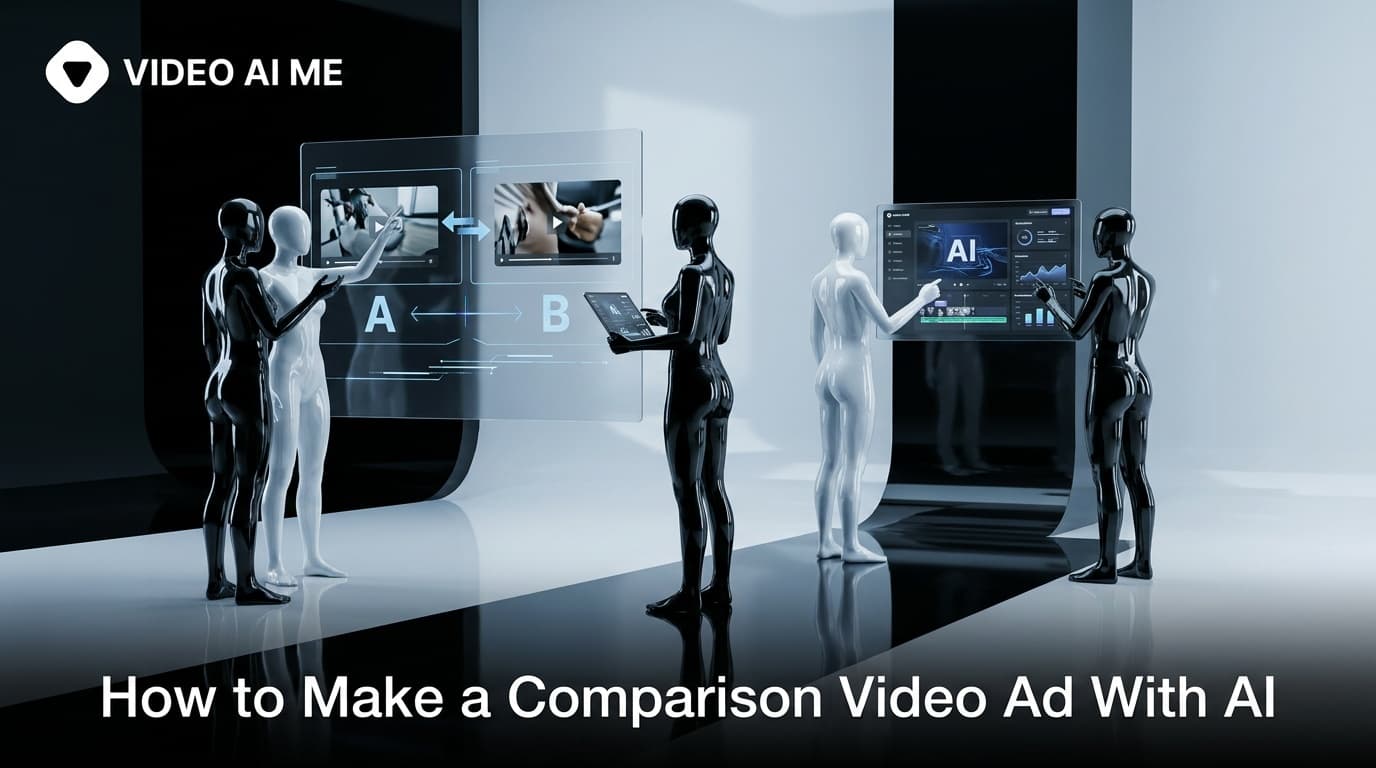
A comparison video ad is the fastest way to win a buyer who is already comparing options. When someone is one click from checkout but stuck between you and a competitor, a side-by-side clip does the deciding for them. This guide shows you how to make a comparison video ad with AI in 2026, using the two formats that convert best: us-vs-them and before-vs-after.
You do not need a film crew, a paid creator, or a week of editing. You need a clear angle, a tight script, and a generation tool that can produce a believable spokesperson on demand. Let's build one step by step.
What Is a Comparison Video Ad?
A comparison video ad puts two things side by side so the viewer can judge the difference in seconds. It works because it does the buyer's homework for them at the exact moment they are weighing choices.
According to Shopify's guide to comparative advertising, comparison creative tends to drive higher engagement and recall when buyers are actively researching options. HubSpot's breakdown of comparative advertising makes the same point: it is most persuasive at the bottom of the funnel, not the top.
There are two dominant formats, and most high-performing ads use one of them:
- Us-vs-them: your product on one side, the "ordinary" alternative on the other. Think Pepsi Challenge or the classic "leading brand" framing.
- Before-vs-after: the painful old way on the left, the result your product delivers on the right. Common in skincare, fitness, software onboarding, and ecommerce.
Both formats compress a buying decision into a watchable story. The job of AI here is to produce the talking spokesperson, the voiceover, and the variations fast enough to test which framing wins.
Why Use AI to Make a Comparison Video Ad
The old way of producing a comparison video ad meant booking talent, writing a shot list, filming, and editing. That is slow and expensive, and it makes testing different angles almost impossible.
AI changes the math. With AI UGC, the verified data we track points to real advantages for advertisers:
- UGC-style content earns roughly 6.9x higher engagement than polished brand content, and 92% of consumers trust peer-style recommendations over brand messaging.
- AI UGC can cut creator costs by about 50% versus hiring human talent, while letting you produce dozens of variations in hours.
- Shoppers who engage with UGC convert 144% more often and generate 162% higher revenue per visitor.
For a comparison video ad specifically, the biggest unlock is volume. You can test the same us-vs-them angle with five different hooks, three spokespersons, and two voiceover tones in a single afternoon. That is how you find the version that actually moves your return on ad spend.
There is a control benefit too. With AI you script every word, so your comparison stays accurate and on-message every time. A human creator might soften a claim, go off script, or shoot a before-and-after that does not match what you can legally support. An AI spokesperson delivers the exact contrast you wrote, in the exact tone you chose, across every variation. For advertisers in regulated categories like finance, supplements, or healthcare, that consistency is not a nice-to-have, it is what keeps the campaign compliant while still letting you ship at speed.
How to Make a Comparison Video Ad With AI: Step by Step
Here is the full workflow. Follow these eight steps in order and you will have a finished, testable comparison video ad.
- Pick your comparison angle. Decide between us-vs-them and before-vs-after. Use us-vs-them when buyers already know the category and are choosing a brand. Use before-vs-after when the value is a visible transformation.
- Identify the one thing you compete on. Price, speed, results, ease, or quality. A comparison video ad that argues five points argues nothing. Pick the single attribute your audience cares about most and build the whole clip around it.
- Write a hook for the first three seconds. Open with the tension, not the logo. "Still paying for [old way]?" or "I tried both so you don't have to" stops the scroll. Our scroll-stopping hook formulas cover dozens of openers you can adapt.
- Script the comparison in a clean structure. Hook, the problem with the alternative, the side-by-side moment, the proof, and a clear call to action. Keep it to 15 to 30 seconds for paid social.
- Choose or create your AI spokesperson. Upload a photo to generate an AI actor, or pick one from a library. This is the face that delivers the verdict, so match the look to your audience.
- Generate the voiceover and lip-synced video. Feed your script to the generation provider, select a natural voice, and render the talking-head clip. Natural, conversational delivery beats an announcer tone every time.
- Build the side-by-side visual. Add the split screen, the before-and-after frames, or the "with us / without us" cards. Captions are essential, since most people watch with sound off.
- Render variations and test. Produce three to five versions with different hooks and spokespersons. Launch them together and let the data pick the winner.
Want to skip the production grind entirely? You can build all of this in one place with the AI UGC generator, which turns a script and a photo into a finished spokesperson ad.
Us-vs-Them vs Before-vs-After: Which Format to Choose
Both formats are proven, but they fit different buying moments. Use this table to decide which comparison video ad format matches your offer.
| Factor | Us-vs-Them | Before-vs-After |
|---|---|---|
| Best for | Crowded categories with named rivals | Visible transformations and results |
| Buyer mindset | Already comparing brands | Aware of a problem, not a solution |
| Typical industries | SaaS, DTC gadgets, subscriptions | Skincare, fitness, productivity tools |
| Main risk | Looking petty or naming a rival | Looking exaggerated or unbelievable |
| Proof element | Feature or price side by side | Genuine before and after states |
| Legal note | Claims must be truthful and verifiable | Results should be typical, not cherry-picked |
A word of caution from the Harvard Business Review analysis of comparative ads: naming a competitor directly can backfire by handing them attention, and unsupported claims invite legal trouble. When in doubt, compare against "the ordinary way" rather than a specific brand, and make sure every claim is true.
Writing a Comparison Video Ad Script That Converts
The script is where most comparison video ads are won or lost. A strong one is short, specific, and built around a single contrast.
Use this five-part skeleton:
- Hook (0 to 3 seconds): name the tension the viewer already feels.
- The old way (3 to 8 seconds): show what the alternative costs them in money, time, or effort.
- The switch (8 to 18 seconds): reveal your product and the side-by-side moment.
- The proof (18 to 25 seconds): one number, demo, or result that makes the claim believable.
- The CTA (25 to 30 seconds): tell them exactly what to do next.
Keep the language conversational. A comparison video ad that sounds like a real person sharing a discovery outperforms one that sounds like a brochure. Avoid jargon, keep sentences short, and let the visual carry the contrast.
One more rule: never invent a testimonial or a fake customer. The FTC's endorsement guidance prohibits testimonials from people who do not exist. Use your AI spokesperson as a clear brand presenter, not a fabricated reviewer, and disclose AI use where required.
Common Mistakes to Avoid in a Comparison Video Ad
Even a good angle can flop on execution. Watch for these traps:
- Comparing too many things. One attribute per ad. Focus the whole clip on the difference that matters.
- No hook. If the first three seconds show your logo, the scroll wins. Lead with tension.
- Unbelievable before-and-after. Exaggerated results trigger skepticism and, in regulated categories, real compliance problems.
- Ignoring captions. Most paid social is watched on mute. Burn in captions or lose the message.
- Testing one version. A single comparison video ad is a guess. Three to five variations is a test.
- Skipping the CTA. Tell the viewer where to go. A great comparison with no next step wastes the click.
The fix for almost all of these is volume plus iteration. Because AI lets you generate variations cheaply, you can afford to be wrong four times to find the one version that wins.
How to Test and Scale Your Comparison Video Ads
A finished ad is the start, not the finish line. The advertisers who win treat every comparison video ad as a hypothesis.
Follow this simple testing loop:
- Launch three to five variations with different hooks and spokespersons in the same campaign.
- Watch the three-second view rate and the click-through rate. The hook owns the first metric, the offer owns the second.
- Kill the bottom performers within a few days of meaningful spend.
- Iterate on the winner. Take the best hook, swap the spokesperson or the proof point, and test again.
- Scale the champion by increasing budget and producing fresh variations before fatigue sets in.
Serious DTC brands often run 20 to 40 fresh UGC variations a month for exactly this reason. AI is what makes that pace affordable. If most of your spend lives on Meta, pair this loop with a structured Meta ads UGC creative framework so your comparison video ad slots into a system built for return on ad spend. For more on building a repeatable testing system, study the best AI UGC ad examples and reverse-engineer the structures that keep winning.
Conclusion
A comparison video ad meets buyers at the moment they are deciding, and it makes the decision easy. Pick one angle, contrast one thing, write a tight five-part script, and let AI handle the spokesperson and the variations.
Start with one us-vs-them or before-vs-after concept, generate three versions, and test. The format is proven. The only thing left is to ship it.
Frequently Asked Questions
Share
AI Summary

Paul Grisel
Paul Grisel is the founder of VIDEOAI.ME, dedicated to empowering creators and entrepreneurs with innovative AI-powered video solutions.
@grsl_frReady to Create Professional AI Videos?
Join thousands of entrepreneurs and creators who use VIDEO AI ME to produce stunning videos in minutes, not hours.
- Create professional videos in under 5 minutes
- No video skills experience required, No camera needed
- Hyper-realistic actors that look and sound like real people
Get your first video in minutes
Related Articles
How to Turn Customer Reviews Into Video Ads (AI)
Learn how to turn reviews into video ads with AI, ethically. Pick strong reviews, script them, generate with an AI presenter, disclose, and test.

8 Best VEED Alternatives for AI Video Ads (2026)
The 8 best VEED alternatives for 2026, compared by price, category, and use case. See why an AI UGC ad generator may beat an editor for ad creative.
Revid AI Alternatives for Faceless & UGC Video (2026)
The best Revid AI alternatives for faceless content and UGC ads in 2026, compared side by side with a clear guide on which tool fits your goals.