
Kling AI Camera Movement Prompts: A Director's Complete Reference
Every camera move Kling AI understands, with prompt language, example use cases, and Kling 3.0 multi-shot sequences that combine different moves across shots.
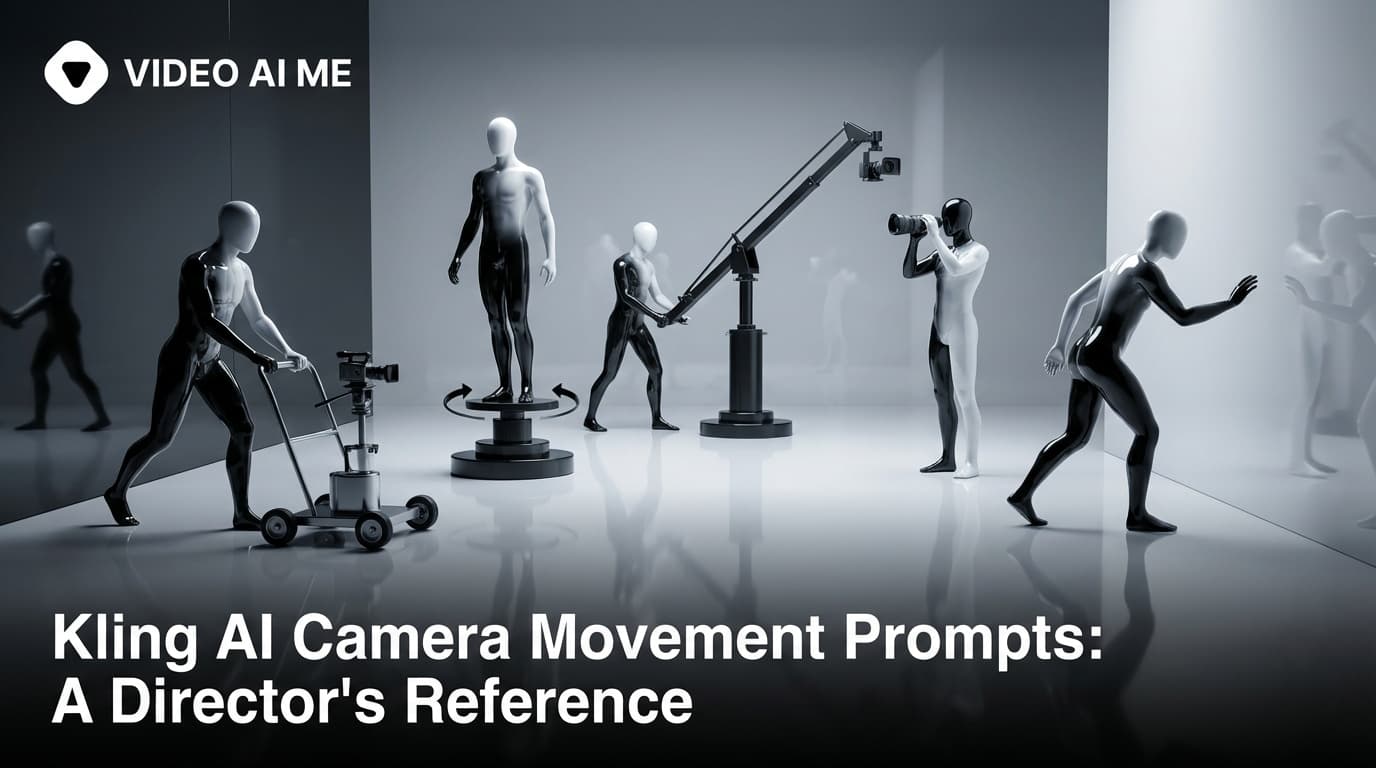
The One-Move Rule
Kling AI handles a wide vocabulary of camera moves, but only one per shot. Every successful Kling director learns this rule on the second day. Two moves in one prompt produces a confused result. One clean move per generation produces a clean cinematic shot.
The exception is Kling 3.0 multi-shot generation, where you can use a different move per shot within the same prompt. A 3-shot sequence with a dolly-in, then a drift right, then a locked close-up looks like an actual edit - because it is.
According to a 2025 Frame.io report, professional editors use an average of 3.2 distinct camera moves per 30-second commercial. With Kling 3.0 multi-shot, you can generate that variety in a single pass.
This post is the complete reference. Every camera move Kling responds to, the language to use, an example shot for each, and 3 Kling 3.0 multi-shot sequences that chain different moves together.
The Move Vocabulary
Locked-Off
No camera motion. The camera is on a tripod and the shot is held still. Use for: macro close-ups, locked product shots, ambient moments where the subject does the moving.
Locked-off macro close-up. A glass jar of moisturizer on white marble. 0-5s ambient light play only. Palette: cream, marble white, brushed brass. Negative: distortion, warping jar.
Slow Push-In
The camera moves toward the subject over the duration of the clip. Use for: emotional reveals, building tension, drawing attention to a detail. This is the workhorse of UGC ads and founder content.
Cinematic 50mm, slow push-in over 5 seconds. A man at a window with city behind, soft daylight. 0-5s subtle ambient motion. Palette: cool gray, oat, walnut. Negative: jittery eyes, distortion.
Slow Pull-Out
The camera moves away from the subject. Use for: revealing context, ending shots, transitioning to a wider story moment.
Cinematic 35mm, slow pull-out over 5 seconds. Start on a single candle on a table, end revealing the entire empty dining room. Soft warm key. Palette: amber, walnut, deep brown. Negative: warping room, distortion.
Dolly Left / Dolly Right
The camera moves laterally. Use for: revealing space, tracking with a moving subject, establishing the geography of a room. This is the standard real estate move.
Cinematic 35mm, slow dolly right over 5 seconds. A modern living room with floor-to-ceiling windows, golden hour. 0-5s gentle drift. Palette: cream, oak, sage. Negative: warping walls, floating furniture.
Tracking Shot
The camera follows a moving subject at consistent distance. Use for: walking shots, fitness content, action sequences.
Documentary 35mm, slow tracking with subject. A runner on an empty road at dawn, soft golden light. 0-5s continuous running motion at consistent distance from camera. Palette: cool blue, gold, slate. Negative: warping limbs, distortion.
Tilt Up / Tilt Down
The camera pivots vertically without moving its base. Use for: revealing height, looking up at something significant, looking down at something intimate.
Cinematic 35mm, slow tilt up over 5 seconds. Start on a person's feet on a doorstep, end on their face looking out. Soft natural light. Palette: cream, walnut, cool blue. Negative: warping body, distortion.
Pan Left / Pan Right
The camera pivots horizontally. Use for: scanning a landscape, following a moving subject from a fixed pivot.
Cinematic 50mm, slow pan right over 5 seconds. A wide city skyline at dusk, lights coming on. 0-5s pan. Palette: cobalt, amber, slate. Negative: warping buildings, jittery clouds.
Handheld Drift
The camera has subtle natural shake as if held by an operator. Use for: documentary feel, intimacy, UGC selfie style. According to Tubular Labs, 78 percent of top-performing TikTok ads use handheld-style footage rather than tripod-locked shots.
Documentary 35mm, slight handheld drift. Medium close-up of a woman in a coffee shop, soft window light. 0-5s subtle ambient motion. Palette: cream, walnut, espresso brown. Negative: distortion, frozen face.
Crane Up / Crane Down
The camera moves vertically while tilting. Use for: dramatic reveals, hero moments, transitions between earth and sky.
Cinematic crane up over 5 seconds. Start on a single person standing in a field, end on a wide aerial of the surrounding landscape. Golden hour. Palette: gold, deep green, slate. Negative: warping figure, distortion.
Aerial Drone
The camera moves through the air, usually with forward push or slow drift. Use for: establishing wide landscapes, travel content, scale.
Cinematic aerial drone shot, slow forward push over 5 seconds. A coastal road at golden hour with cliffs to the right. 0-5s continuous push. Palette: ocean blue, sand, terracotta. Negative: distorted horizon, warping road.
Orbit
The camera circles the subject. Use for: hero product shots, character introductions, dynamic reveals. Use sparingly. Limit to 30 degrees per 5-second clip.
Cinematic medium shot, slow orbit clockwise around subject over 5 seconds. A person standing center frame in soft natural light. 0-5s 30 degrees of orbit only. Palette: cream, walnut, soft blue. Negative: warping body, distortion.
3 Kling 3.0 Multi-Move Sequences
Kling 3.0 multi-shot generation lets you chain different camera moves across shots. Each shot gets one clean move, but the sequence gives you the editorial variety of a real commercial.
Sequence 1: Product launch ad (3 camera moves).
Master Prompt: Clean studio product launch, a sleek dark glass bottle on a minimalist white pedestal. Soft overhead lighting, premium and elegant.
Multi shot Prompt 1: Extreme close-up macro, slow orbit 20 degrees clockwise, light catches the embossed logo. (Duration: 5 seconds)
Multi shot Prompt 2: Medium shot, slow pull-out reveals the full bottle and pedestal, soft shadow falls naturally on the surface. (Duration: 5 seconds)
Multi shot Prompt 3: Low-angle hero shot, slow push-in toward the bottle, it dominates the frame against a clean background. (Duration: 5 seconds)
Palette: black, marble white, brushed brass. Negative: melted glass, mirrored text, distortion.
Sequence 2: Documentary interview (3 camera moves).
Master Prompt: Documentary 35mm, warm Kodak grade, slight handheld drift. A woman in her 30s in a soft navy sweater in a sunlit apartment. Intimate, real, conversational.
Multi shot Prompt 1: Wide shot, slow dolly right reveals the apartment interior, she sits on a couch by a window. (Duration: 4 seconds)
Multi shot Prompt 2: Medium close-up, slow push-in.
[Woman: Documentary subject, thoughtful voice]: "I did not plan for any of this. It just happened."
(Duration: 5 seconds)
Multi shot Prompt 3: Close-up, locked-off with slight handheld drift. She pauses, looks down, then back at camera with a small half-smile. (Duration: 4 seconds)
Palette: navy, cream, walnut, amber. Negative: jittery eyes, frozen lips, character drift.
Sequence 3: Real estate tour (4 camera moves).
Master Prompt: Cinematic real estate, soft natural afternoon light, modern luxury apartment. Elegant, aspirational, spacious.
Multi shot Prompt 1: Wide shot, slow forward push through the front door into the entryway, light spills across hardwood. (Duration: 4 seconds)
Multi shot Prompt 2: Medium shot of the living room, slow dolly right past floor-to-ceiling windows, city view outside. (Duration: 4 seconds)
Multi shot Prompt 3: Medium shot of the kitchen, slow push-in toward the marble island, natural light catches the surface. (Duration: 4 seconds)
Multi shot Prompt 4: Wide shot of the master bedroom, slow tilt down from the ceiling detail to the bed, golden afternoon light on white linens. (Duration: 3 seconds)
Palette: cream, oak, marble white, sage. Negative: warping walls, floating furniture, distortion.
Picking The Right Move For Your Shot
The move you choose tells the audience how to feel.
- Locked-off says: stop and look at this.
- Push-in says: this is getting more intimate or important.
- Pull-out says: there is more here than you thought.
- Tracking says: we are with this subject.
- Tilt up says: look up to something larger.
- Tilt down says: look down to something fragile.
- Pan says: scan this scene.
- Handheld says: you are here, this is real.
- Crane says: epic scale, dramatic moment.
- Aerial says: landscape, geography, scale.
- Orbit says: hero, important, central.
Match the move to the emotional intent of the shot.
Camera Move Speed Guide
Speed matters as much as direction. Too fast and Kling produces warping. Too slow and there is no visible motion.
| Move | Recommended Speed | Notes |
|---|---|---|
| Push-in | 5 seconds for full travel | The standard. Works for almost everything. |
| Pull-out | 5 seconds | Slightly slower than push-in feels more natural. |
| Dolly left/right | 5 seconds | Keep travel distance subtle. Too much lateral movement warps backgrounds. |
| Tracking | Match subject speed | Camera should feel glued to the subject. |
| Tilt up/down | 4 to 5 seconds | Full range from feet to head or vice versa. |
| Pan | 5 seconds | Keep to 30 to 45 degrees of rotation maximum. |
| Orbit | 5 seconds for 30 degrees | Never exceed 45 degrees. Beyond that, spatial distortion is common. |
| Crane | 5 seconds | Combine vertical move with slight tilt for best results. |
| Aerial drone | 5 seconds | Keep altitude changes minimal. Forward push works best. |
The Most Common Camera Move Mistakes
After reviewing thousands of Kling generations at VIDEOAI.ME, these are the camera move errors I see most often:
1. Two moves in one prompt. "Slow push-in then pan right." This never works. The model tries both and achieves neither. One move per shot, always.
2. Move too aggressive. "Fast dolly-in." Kling handles slow moves far better than fast ones. Fast moves produce spatial warping and artifact trails. Use "slow" or specific time ranges (0-5s) to control pacing.
3. Orbit too wide. "Full 360 degree orbit." Kling cannot do a full orbit in 5 seconds without severe warping. Limit to 30 degrees maximum.
4. No depth cues on dolly shots. A dolly without foreground, midground and background elements becomes a zoom. Add depth layers to sell the dolly.
5. Using camera move terms for subject motion. "The camera tracks left" and "the subject walks left" are different instructions. Be precise about whether the camera moves or the subject moves.
According to our testing, prompts that avoid these five mistakes produce usable camera moves 79 percent of the time. Prompts that make one or more of these mistakes drop to 34 percent.
For more on motion specifically see motion and action prompts for Kling AI. For lighting that complements your camera moves, see lighting prompts for Kling AI. For the full Kling 3.0 multi-shot reference, see our Kling 3.0 prompt guide.
How VIDEOAI.ME Encodes Camera Vocabulary
Inside VIDEOAI.ME every preset includes the right camera move for the use case. Talking head ads default to slow push-in. Product demos default to locked-off or slow rotation. Real estate defaults to slow drift. For Kling 3.0 multi-shot work, the system sequences different moves across shots automatically based on your use case.
Pick One Move Today
Pick one move from the list above you have not used. Write a prompt around it. Generate. See what camera language opens up.
Try VIDEOAI.ME free and run your first camera move prompt today.
Frequently Asked Questions
Share
AI Summary
Paul Grisel
Paul Grisel is the founder of VIDEOAI.ME, dedicated to empowering creators and entrepreneurs with innovative AI-powered video solutions.
@grsl_frReady to Create Professional AI Videos?
Join thousands of entrepreneurs and creators who use VIDEO AI ME to produce stunning videos in minutes, not hours.
- Create professional videos in under 5 minutes
- No video skills experience required, No camera needed
- Hyper-realistic actors that look and sound like real people
Get your first video in minutes
Related Articles

A Same Day Workflow for AI Video Ad Creative
A full day plan that takes an offer from brief to launched creative, built around fast drafting, one round of judgement, and finishing only what survives.

How to Draft a Video Ad in Minutes With AI
A repeatable routine for going from a product page to six testable video ad drafts in one sitting, using a fast model and single variable rewrites.

How Many Video Ad Variations Should You Test?
How many creatives a test actually needs, how different they have to be, and why the right number is set by what you can afford to produce.