
UGC vs Influencer Marketing: Key Differences Explained (2026)
Understand the key differences between UGC creators and influencer marketing. Learn which is better for your goals, costs, and content ownership.
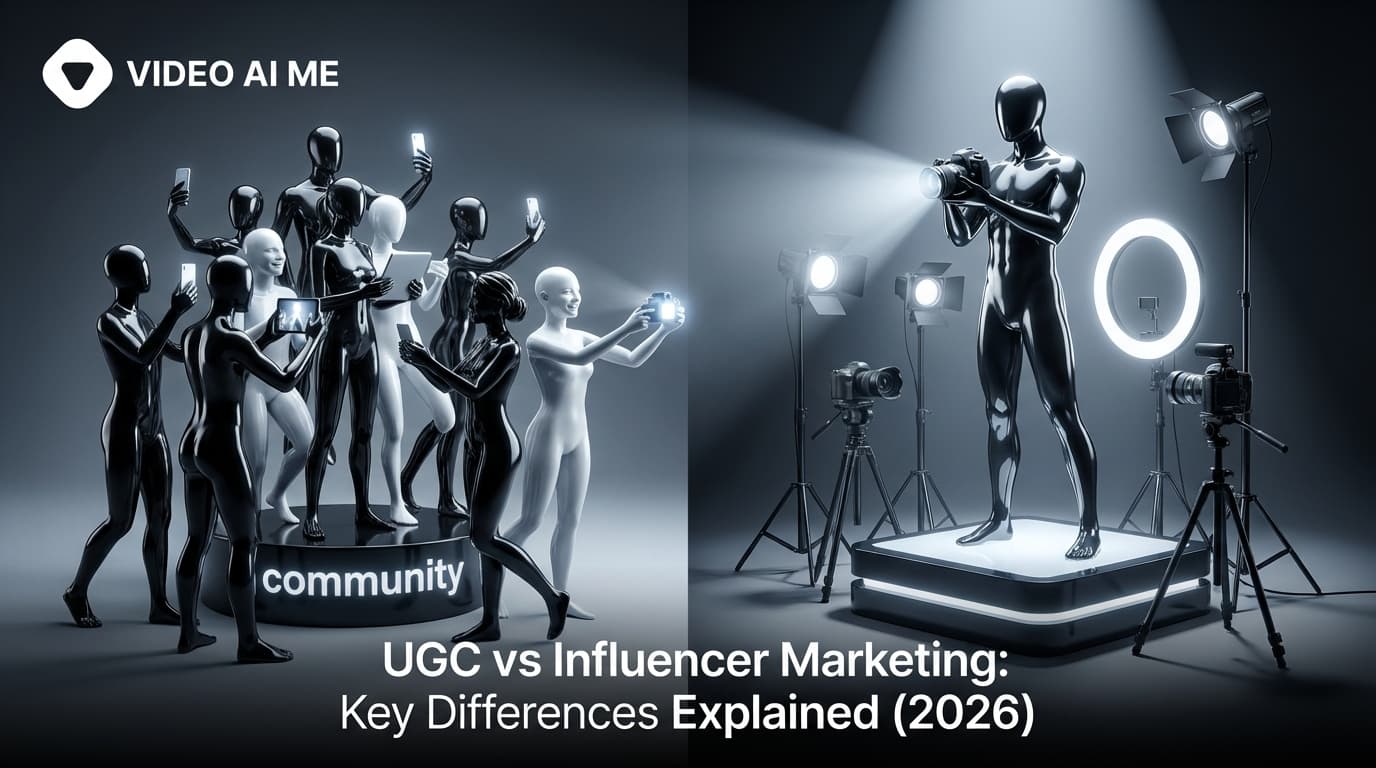
Understanding the Core Difference
UGC and influencer marketing are often confused, but they represent fundamentally different approaches to creator-brand partnerships.
Influencer Marketing: Brands pay for access to an audience. The influencer posts content to their followers.
UGC (User-Generated Content): Brands pay for content itself. The brand owns and posts the content on their own channels.
This distinction affects everything: pricing, strategy, who can participate, and expected outcomes.
Side-by-Side Comparison
| Factor | UGC Creator | Influencer |
|---|---|---|
| Followers needed | None | Large audience required |
| Where content lives | Brand's channels | Creator's channels |
| Payment based on | Deliverables/content | Follower count/engagement |
| Content ownership | Brand owns it | Creator posts it |
| Price range | $150-$500/video | $100-$100,000+/post |
| Barrier to entry | Low | High |
| Ongoing value | Brand can reuse forever | Single post, limited lifespan |
How UGC Works
A UGC creator produces content that looks authentic and native to social media. Brands then:
- Post it on their own social accounts
- Run it as paid advertisements
- Use it on websites and emails
- Repurpose across all marketing channels
The creator delivers content files. The brand does whatever they want with them (within agreed usage rights).
Example: A skincare brand hires a UGC creator for $200 to film a 60-second review. The brand receives the video file, runs it as a TikTok ad, posts an edited version on Instagram, and uses clips on their website. The creator's follower count is irrelevant—only the content quality matters.
How Influencer Marketing Works
An influencer posts content to their own followers, leveraging the trust they've built with their audience.
- Brand pays for a post/story/video on the influencer's account
- Influencer's followers see branded content
- Brand gains exposure and potential sales
- Content stays on influencer's platform
The value is in the audience access, not just the content.
Example: A skincare brand pays an influencer with 500K followers $10,000 to post a product review. The influencer's audience sees the endorsement, and some percentage convert to customers. The brand doesn't own the content—it lives on the influencer's account.
When to Use UGC
UGC is typically better for:
Paid Advertising Brands need lots of creative to test in ads. UGC provides cost-effective content that performs well because it looks organic in feeds.
A/B Testing With $2,000, a brand can create 10+ pieces of UGC to test different hooks, angles, and messaging. That same budget might get one influencer post.
Long-Term Asset Building Brands own UGC forever. A single video can run in ads for months or years, generating returns far exceeding the initial cost.
Authenticity at Scale Brands can work with 20 different UGC creators to get diverse perspectives, rather than putting all budget into one influencer.
Budget Constraints Startups and small brands often can't afford macro-influencers. UGC provides high-quality content at accessible prices.
When to Use Influencer Marketing
Influencer marketing excels for:
Brand Awareness When the goal is getting in front of new audiences, influencers with large, engaged followings provide immediate reach.
Product Launches Coordinated influencer campaigns create buzz and social proof around new product releases.
Trust Transfer Some influencers have such strong audience trust that their endorsement carries significant weight.
Specific Audience Targeting Niche influencers (parenting, gaming, fitness) provide access to exactly the audience a brand wants.
Long-Form Content YouTubers and podcasters create extended content that goes deeper than typical UGC formats.
Cost Comparison
UGC Pricing
| Experience Level | Rate Per Video |
|---|---|
| Beginner | $50-$100 |
| Intermediate | $150-$250 |
| Experienced | $250-$500 |
| Specialist | $500-$1,000+ |
Total cost for 10 videos: $1,500-$3,000 (intermediate creators)
Influencer Pricing
| Follower Count | Typical Rate Per Post |
|---|---|
| Nano (1K-10K) | $10-$100 |
| Micro (10K-100K) | $100-$1,000 |
| Mid-tier (100K-500K) | $1,000-$5,000 |
| Macro (500K-1M) | $5,000-$25,000 |
| Mega (1M+) | $25,000-$100,000+ |
Total cost for 10 posts: $10,000+ (mid-tier influencers)
ROI Considerations
With UGC:
- Brand owns content and can run ads indefinitely
- Can test multiple creative approaches
- Content compounds value over time
With influencers:
- One-time exposure to audience
- Can negotiate content rights (at additional cost)
- Value concentrated in initial post period
The Hybrid Approach
Many successful brands use both strategies:
Awareness + Performance
- Influencers for product launches and brand awareness
- UGC for ongoing paid advertising and performance marketing
Content Repurposing
- Work with influencers who allow content licensing
- Run influencer content as paid ads (whitelisting)
Creator Progression
- Discover talent through UGC
- Elevate top performers to ambassador/influencer relationships
For Creators: Which Path Should You Take?
Start with UGC If:
- You have fewer than 10K followers
- You want to earn money immediately
- You prefer making content over building audience
- You're camera-comfortable but private
- You want predictable income
Focus on Influencing If:
- You already have an engaged following
- You enjoy community building
- You want to build a personal brand
- You're comfortable being "public"
- You can handle income variability
The Best Path: Both
Many successful creators do both:
- Start with UGC to learn content creation and earn immediately
- Post your own content to build an audience naturally
- Add influencer work once you have meaningful followers
- Diversify income between UGC, sponsored posts, and other streams
Common Misconceptions
"UGC creators are just influencers with small followings"
Wrong. UGC and influencing are different skills. A great UGC creator might have 500 followers. A great influencer might create mediocre content but have massive audience trust. They're distinct professions.
"Influencer marketing is dead"
Also wrong. It's evolved. Macro-influencer effectiveness has declined, but micro-influencers and authentic creators remain powerful. The channel is maturing, not dying.
"UGC is cheaper therefore lower quality"
Price doesn't determine quality. Many UGC creators are former professional videographers or trained content specialists. Brands pay less per piece because they're not paying for audience access.
"You can't make real money with UGC"
Full-time UGC creators commonly earn $5,000-$10,000+ monthly. Some exceed $20,000. It's a legitimate career path with lower barriers to entry than influencing.
The Future of UGC and Influencer Marketing
Both will continue evolving:
UGC Trends:
- AI tools making creation faster
- More sophisticated performance tracking
- Specialization in ad platforms (TikTok, Meta)
- AI avatar content expanding possibilities
Influencer Trends:
- Shift toward micro/nano influencers
- Performance-based deals (not just flat fees)
- Long-term ambassador relationships
- Platform diversification
Convergence:
- Influencers offering UGC services
- UGC creators building audiences
- Brands wanting both reach and content
Making Your Choice
For Brands:
- Need content for ads? → UGC
- Need immediate reach? → Influencers
- Have limited budget? → Start with UGC
- Launching new product? → Consider both
For Creators:
- Have no followers? → Start with UGC
- Love building community? → Focus on influencing
- Want stable income? → UGC provides more predictability
- Want to do both? → That's the optimal path
Both UGC and influencer marketing have their place. Understanding the differences helps you choose the right approach for your specific goals.
Interested in becoming a UGC creator? Read our complete UGC creator guide to learn how to start, price your work, and find clients.
Want to create UGC at scale? Try VIDEOAI.ME free to see how AI avatars can enhance your content production.
Frequently Asked Questions
Share
AI Summary

Paul Grisel
Paul Grisel is the founder of VIDEOAI.ME, dedicated to empowering creators and entrepreneurs with innovative AI-powered video solutions.
@grsl_frReady to Create Professional AI Videos?
Join thousands of entrepreneurs and creators who use VIDEO AI ME to produce stunning videos in minutes, not hours.
- Create professional videos in under 5 minutes
- No video skills experience required, No camera needed
- Hyper-realistic actors that look and sound like real people
Get your first video in minutes
Related Articles

MiniMax H3 UGC Prompt Templates for Ad Creative
Reusable UGC prompt templates with the variables marked, so you can produce a whole batch of creator style ads by swapping four fields.

Seedance 2.5 UGC Prompt Templates for Ads
Six fill in the blank UGC prompt templates for Seedance 2.5, each with a fully filled worked example, plus how to direct dialogue when the audio is generated.

How to Make AI UGC Videos With Seedance 2.5
A five step playbook for creator style UGC clips with Seedance 2.5: casting, prompts that carry the spoken hook, reference images for batches, and the credit math.