
16:9 and 9:16 From One Prompt: Cross-Platform Edge
16:9 and 9:16 AI video cross platform output from one prompt is the workflow that wins both reach and revenue in 2026. Here's how to build it.
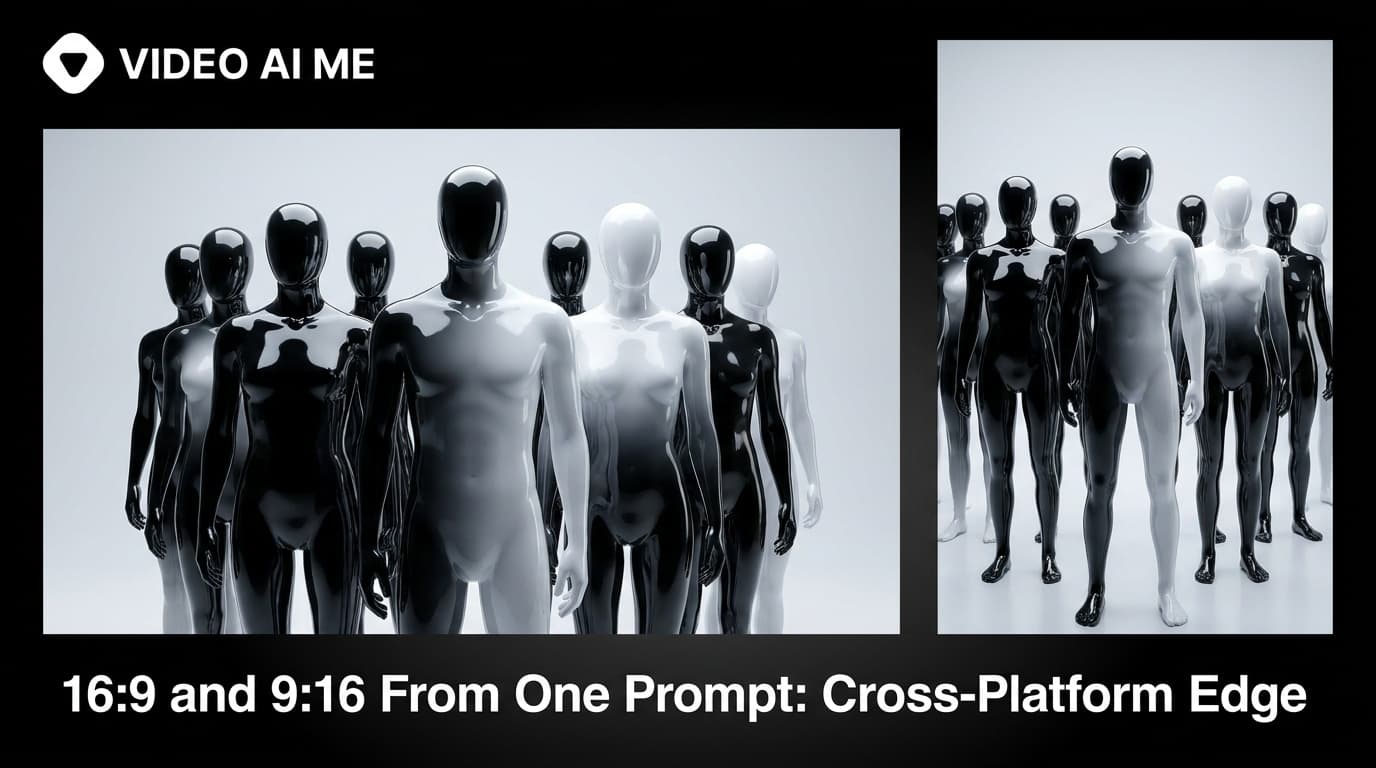
16:9 and 9:16 AI video cross platform output is the single workflow upgrade that separates creators who go viral once from creators who build real businesses. The Korean Baseball AI trend in May 2026 was instructive. Every creator riding it shipped vertical 9:16 to TikTok and watched the views climb. Almost none of them shipped a 16:9 cut to YouTube long-form. Result: 8 million views, near-zero ad revenue, and an audience that never had a long-form home to land in.
This article is about why posting in only one format is a 2x to 10x revenue mistake, and how to ship both 16:9 and 9:16 from a single AI prompt without doubling your workload.
Why One Format Is a Tax on Your Reach and Your Revenue
The two formats serve completely different jobs.
Vertical 9:16 is reach. TikTok, Instagram Reels, and YouTube Shorts are vertical-native and account for the majority of new audience discovery in 2026. Vertical videos hit 76% completion rates, compared to 54% for horizontal videos on mobile, mostly because 81% of users watch short-form content on phones held vertically.
Horizontal 16:9 is revenue. YouTube long-form RPMs range from $1 to $30 per 1,000 views depending on niche. TV and tablet viewers, who tend to be older and higher-LTV, watch horizontally. X video, LinkedIn, Facebook in-feed, and embedded video on blogs and email all prefer horizontal.
If you only ship 9:16, you get reach without revenue. If you only ship 16:9, you get revenue without reach. A creator who ships both captures the full stack: TikTok pulls millions of viewers into the brand, YouTube long-form converts those viewers into watch hours and ad payouts, and X horizontal cuts feed the X creator program payouts.
The Korean Baseball AI trend creators who ignored 16:9 essentially handed YouTube revenue back to the platform. There is no version of that decision that makes sense for someone trying to build a content engine.
The Naive Approach: Crop a Vertical Down to Horizontal
The wrong way to handle dual format is to generate one aspect ratio and try to retrofit the other. Cropping a 9:16 vertical down to 16:9 horizontal almost always cuts off your character's face or composition. Stretching it adds black bars that the YouTube algorithm penalizes for retention.
The slightly less wrong approach is to film or generate in 16:9 and then crop down to 9:16. This works better because there is more horizontal real estate to crop from, but it still produces awkward compositions because the vertical safe zone was not planned at shoot time.
The right approach is to generate both formats with the safe zone planned from the start, ideally from the same prompt so the character, voice, and script stay identical across versions.
What 'From One Prompt' Actually Means
A proper dual-format AI workflow takes a single prompt and outputs both aspect ratios with the character framed correctly for each. Same face. Same voice. Same script. Different framing, planned for the format.
Here is the workflow:
- Write your script once.
- Select your AI actor.
- Specify aspect ratio variants: 16:9 and 9:16.
- Generate. The system produces both files, framed for their respective aspect ratios, ready to post.
- Add platform-specific copy: vertical caption and hashtags for TikTok, longer YouTube description for the 16:9 version.
Total time per dual-format deliverable: minutes, not hours. No second AI run. No recropping. No reshoot.
Try the dual-format workflow on VIDEOAI.ME and ship both 16:9 and 9:16 from a single prompt.
The Cross-Platform Distribution Plan
Once you have both formats, here is how they actually deploy.
9:16 Vertical Goes To
- TikTok (primary reach driver)
- Instagram Reels
- YouTube Shorts
- Facebook Reels
- Snapchat Spotlight (for younger demos)
- LinkedIn (vertical now performs there too)
16:9 Horizontal Goes To
- YouTube long-form (primary revenue driver)
- X (formerly Twitter), where horizontal is native
- LinkedIn (for B2B content)
- Facebook in-feed video
- Your website, blog, email campaigns
- Vimeo, podcast video versions, partner embeds
The same Korean Baseball AI trend video becomes 11 distribution units across two formats. One generation. One prompt. Eleven posts.
This is the throughput math that lets a solo creator outproduce a small agency.
Real-World Output Per Week
Let me show what a dual-format workflow actually does to your weekly output.
| Asset | Single-Format Creator (9:16 only) | Dual-Format AI Workflow |
|---|---|---|
| Source videos generated per week | 5 | 5 |
| Format variants per source | 1 | 2 |
| Total deliverables | 5 | 10 |
| Platforms covered | TikTok, Reels, Shorts | All major platforms |
| Revenue surfaces unlocked | Limited (Shorts payouts) | YouTube long-form, X creator pool, LinkedIn |
| Extra production time | Baseline | +0 minutes per source |
Double the deliverables for zero additional production time. The catch is that you need a tool that exports both formats from one generation. Most AI video tools in 2026 still force you to re-prompt or re-generate for each format, which doubles the cost and kills the workflow.
Why Solo Creators Could Not Do This Before
Dual-format production used to require dual-mount filming with two cameras, one framed for 16:9 and one for 9:16, both recording simultaneously. That required studio space, two camera operators, two color grading passes, and two editors. Total cost: thousands per shoot.
For a solo creator with no budget, dual-mount was impossible. The creator either filmed vertical and abandoned long-form revenue, or filmed horizontal and abandoned short-form reach. Both choices were bad.
AI generation removes the camera entirely. The same script, the same actor, and the same prompt produce both aspect ratios without a second shoot. The cost difference between one format and two is essentially zero.
This is the moment that solo AI creators in 2026 can outproduce traditional studios on cross-platform reach. The Korean Baseball AI trend is one of the first big moments where dual-format AI creators are visibly outperforming single-format creators in both views and revenue.
For the broader engine framework, see Korean Baseball AI Trend: Build a Personal Brand Engine.
How Each Format Earns Differently
The dual-format approach is not just about distribution. The two formats have different earnings models.
9:16 Earnings
- TikTok Creator Fund: low CPM, but volume can compound
- TikTok Shop: affiliate commissions, brand partnerships
- Reels bonuses: variable but real
- YouTube Shorts ad share: lower per-view but growing
- Brand sponsorships on TikTok: $500 to $50,000 per post depending on follower count
16:9 Earnings
- YouTube Partner Program: $1 to $30 RPM per 1,000 views
- YouTube Premium revenue share
- YouTube channel memberships, Super Chat, Super Stickers
- Brand sponsorships on long-form: typically 3 to 5x what Shorts sponsorships pay
- LinkedIn lead generation (for B2B creators)
A creator running both formats stacks all these revenue lines. A creator running one format leaves the other half empty.
The Korean Baseball AI Trend, Done Right
Here is how a Korean Baseball AI trend video should have been deployed using dual-format from day one.
- Generate the 5-second Stadium Goddess clip with your recurring AI actor.
- Specify both 16:9 and 9:16 outputs at generation time.
- Post the 9:16 to TikTok, Reels, and Shorts. Goal: viral reach.
- Stitch the 16:9 cut into a longer 5-to-10-minute YouTube long-form video where your character analyzes the trend, breaks down how it was made, and previews what the next AI trend will look like. Goal: YouTube revenue and watch time.
- Cut a 60-second 16:9 version for X and LinkedIn for cross-platform brand presence.
- Use the long-form 16:9 as the asset for your email list and blog post.
One generation. Six distribution points. The viral video pulls reach. The long-form pulls revenue. The brand grows on every platform that matters.
For more on monetizing this kind of viral moment, see How to Monetize a Viral AI Korean Baseball Video Before the Trend Dies.
Cross-Platform Audience Behavior in 2026
The two formats also serve different audience behaviors that matter for brand-building, not just monetization.
Vertical viewers are typically in discovery mode. They are scrolling, sampling, and giving you 2 to 5 seconds to earn their attention. Conversion to follower, to email, or to purchase is low on a per-view basis but compounds at high volume.
Horizontal viewers are typically in commitment mode. They sat down to watch something specifically. They are on a TV, a tablet, or a desktop monitor. They will watch 5 to 20 minutes of content if it earns their attention. Conversion to deep follower and customer is dramatically higher on a per-view basis.
A creator running only vertical builds reach but never the deeper bond. A creator running only horizontal builds bond but never the reach. The dual-format engine builds both, with the vertical feeding the horizontal and the horizontal converting the audience the vertical brought in.
This is the funnel logic that 2026's top AI creators have internalized: vertical for top of funnel, horizontal for middle and bottom. The same AI actor anchors both sides so the audience experience feels continuous across formats.
For the multilingual layer that multiplies both formats, see Build an AI Actor Once, Post in 6 Languages: The Playbook.
Stop Posting in One Format. Start Capturing Both Halves.
The Korean Baseball AI trend is going to keep producing new viral moments for weeks. Every one of them is more valuable when your workflow ships both 16:9 and 9:16 from a single prompt. Every one of them is worth half as much when you only ship vertical.
VIDEOAI.ME generates both formats from one prompt, with the same AI actor, the same voice, and the same script. The workflow that took studios a multi-camera shoot and a team to produce now runs on a single prompt for a single creator.
Ship both formats from one prompt on VIDEOAI.ME and stop leaving YouTube revenue and TikTok reach on the table.
Frequently Asked Questions
Share
AI Summary

Paul Grisel
Paul Grisel is the founder of VIDEOAI.ME, dedicated to empowering creators and entrepreneurs with innovative AI-powered video solutions.
@grsl_frReady to Create Professional AI Videos?
Join thousands of entrepreneurs and creators who use VIDEO AI ME to produce stunning videos in minutes, not hours.
- Create professional videos in under 5 minutes
- No video skills experience required, No camera needed
- Hyper-realistic actors that look and sound like real people
Get your first video in minutes
Related Articles

MiniMax H3 UGC Prompt Templates for Ad Creative
Reusable UGC prompt templates with the variables marked, so you can produce a whole batch of creator style ads by swapping four fields.

Seedance 2.5 UGC Prompt Templates for Ads
Six fill in the blank UGC prompt templates for Seedance 2.5, each with a fully filled worked example, plus how to direct dialogue when the audio is generated.
How to Make AI UGC Videos With Seedance 2.5
A five step playbook for creator style UGC clips with Seedance 2.5: casting, prompts that carry the spoken hook, reference images for batches, and the credit math.