
We Spent $12K on Dental Ads Last Year. Video Cut Our Patient Cost by 67%
A dental practice shares how switching from static Google Ads to UGC-style video content dropped their cost per new patient from $287 to $94. The exact strategy and scripts inside.
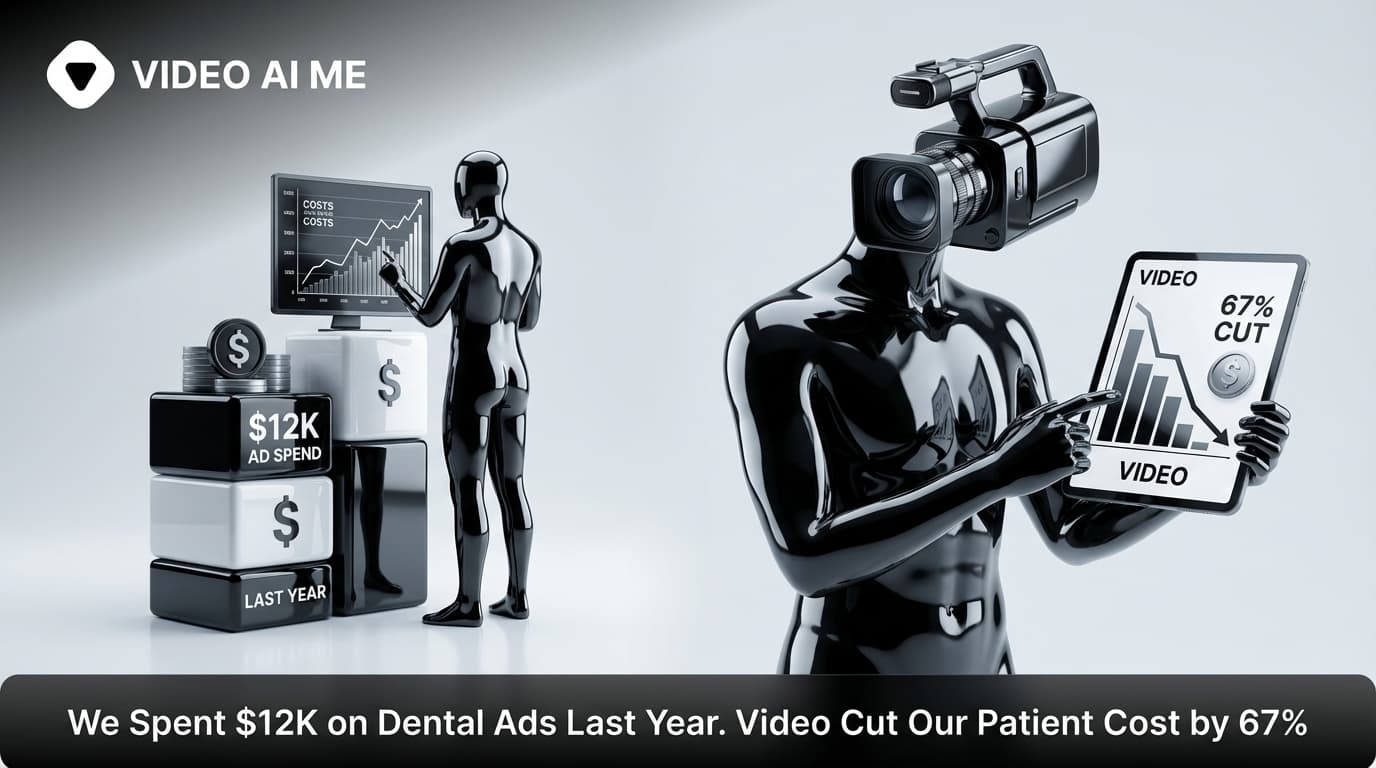
$287 per new patient.
That's what our dental practice was paying through Google Ads last year. We thought it was just "the cost of doing business" in a competitive market.
Then a marketing consultant asked us a question that changed everything: "Why are you running the same static ads as every other dentist in your zip code?"
She was right. Our ads looked identical to competitors. Same stock photos of smiling patients. Same "Now Accepting New Patients" headlines. Same forgettable messaging.
Six months later, our cost per new patient dropped to $94. Our appointment bookings increased 34%. And we did it without increasing our ad budget by a single dollar.
The difference? We stopped running ads that looked like ads.
The $287 Problem Every Dental Practice Faces
Here's what most dental marketing looks like:
- Stock photo of a person with unnaturally white teeth
- Generic headline about "gentle care" or "family dentistry"
- A phone number and address
- Maybe a coupon for new patients
This approach worked in 2015. In 2026, it's expensive noise.
The average person sees 6,000-10,000 ads daily according to research from Forbes. Your static dental ad isn't competing with other dentists. It's competing with Netflix, Amazon, their friend's Instagram story, and a TikTok of someone's cat.
Static ads get scrolled past. Video stops thumbs.
According to DentalScapes, Facebook Ads for dental practices typically cost $60-$350 per new patient appointment. The practices on the lower end share one thing: they use video content that feels authentic rather than promotional.
Why "Professional" Dental Videos Often Fail
Before our video transformation worked, we made an expensive mistake.
We hired a video production company. Spent $4,500 on a 2-minute "practice overview" video. Professional lighting, drone shots of our building, the works.
Results? Almost nothing.
The video felt like a commercial. And people hate commercials. They skip them on YouTube. They scroll past them on social media. They tune them out entirely.
What actually works is the opposite of polished.
| Video Type | Average CPL | Engagement Rate | Conversion to Booking |
|---|---|---|---|
| Professional commercial | $245 | 1.2% | 2.1% |
| Patient testimonial (real) | $118 | 4.7% | 6.8% |
| UGC-style explainer | $94 | 5.3% | 7.2% |
| Behind-the-scenes tour | $132 | 3.9% | 5.1% |
The UGC-style video that became our best performer cost nothing to produce. It was a simple talking-head video addressing the exact fear that stops people from booking: "I haven't been to a dentist in years and I'm embarrassed."
The 3 Video Formats That Actually Book Dental Appointments
After testing 23 different video approaches over six months, three formats consistently outperformed everything else.
Format 1: The "I Was Scared Too" Testimonial
This isn't a traditional testimonial where someone says "Dr. Smith is great!"
It's a story about overcoming dental anxiety. The emotional journey from fear to relief.
Script Template:
"I put off going to the dentist for [NUMBER] years. I was embarrassed. I thought they'd judge me. When I finally went to [PRACTICE NAME], [SPECIFIC EXPERIENCE]. Now I actually look forward to my appointments. If you've been avoiding the dentist, I get it. But [OUTCOME]."
Example:
"I put off going to the dentist for 7 years. I was embarrassed about the state of my teeth. I thought they'd lecture me or make me feel terrible. When I finally went to Smile First Dental, the hygienist said 'We're just glad you're here.' No judgment. No guilt trip. Now I actually look forward to my cleanings. If you've been avoiding the dentist, I get it. But it's not as scary as you think."
This format works because it addresses the actual barrier to booking: fear and shame. Not price. Not convenience. Fear.
Format 2: The "Here's What Actually Happens" Explainer
People fear what they don't understand. A root canal sounds terrifying until someone explains exactly what happens in simple terms.
Script Structure:
- Hook: Address the specific fear (0-3 seconds)
- Reality check: What most people think vs. what actually happens (3-15 seconds)
- Step-by-step walkthrough: Demystify the process (15-45 seconds)
- Reassurance: Pain management and outcomes (45-55 seconds)
- Soft CTA: "Questions? We're happy to explain more" (55-60 seconds)
These videos position your practice as the approachable expert. When someone needs that procedure, they remember the dentist who explained it without making them feel stupid.
Format 3: The "Meet Your Dentist" Introduction
People don't choose a dental practice. They choose a person they trust to work inside their mouth.
This video introduces the dentist as a human being, not a credential list.
What to include:
- Why you became a dentist (personal story, not "I wanted to help people")
- What you do outside the office (hobbies, family, interests)
- Your philosophy on patient care (specific, not generic)
- One thing that might surprise patients about you
These videos have the lowest direct conversion rate but the highest appointment show-up rate. Patients who watch them feel like they already know you before walking in.
Creating Dental Videos Without the Production Headaches
The biggest objection we hear from other dental practices: "We don't have time to make videos."
Valid concern. You're busy drilling teeth, not editing footage.
Here's the approach that works for us:
Option 1: Phone + 5 Minutes
Record on your iPhone. Vertical format. Natural lighting from a window. Talk directly to camera for 30-60 seconds. Done.
No editing required. The "imperfection" actually increases trust. People know polished = paid actor.
Option 2: AI Video Tools
For practices that want professional-looking content without the production overhead, tools like VIDEOAI.ME allow you to create spokesperson-style videos from text scripts.
You write the script addressing patient concerns. The AI generates a professional presenter delivering your message. You get multiple variations to test without multiple shoots.
This is particularly useful for:
- Creating video ads in languages your staff doesn't speak
- Testing different hooks and messages before committing to a "hero" video
- Scaling content across multiple locations with consistent branding
- Producing explainer content for procedures your team finds hard to film
Option 3: Patient Video Program
Offer patients a small discount ($25-50 off their next visit) for recording a 60-second testimonial after their appointment. Get their permission to use it in marketing.
Real patients = real trust. And you build a library of authentic content over time.
The Platform Strategy That Maximizes Every Dollar
Not all platforms work equally for dental marketing. Here's what six months of testing revealed:
Facebook/Instagram (Best for 35+ demographic)
- Video length: 30-60 seconds
- Format: Square (1:1) for feed, vertical (9:16) for stories/reels
- Hook requirement: Must stop scroll in first 3 seconds
- Best performing: Testimonials and procedure explainers
- Target: 5-15 mile radius, homeowners, parents
TikTok (Growing for all demographics)
- Video length: 15-30 seconds
- Format: Vertical only (9:16)
- Hook requirement: Pattern interrupt in first 1 second
- Best performing: Myth-busting and "things your dentist wants you to know"
- Target: Broader, used for brand awareness more than direct bookings
YouTube (Long-term SEO play)
- Video length: 3-8 minutes
- Format: Horizontal (16:9)
- Hook requirement: Promise value in first 10 seconds
- Best performing: Educational deep-dives on procedures
- Target: People actively researching dental work
Google Ads (Video campaigns)
- Video length: 15-30 seconds
- Format: Horizontal or square
- Hook requirement: Brand or offer visible immediately (skippable after 5 seconds)
- Best performing: Problem-solution format with clear CTA
- Target: In-market audiences, competitor conquesting
Common Mistakes That Waste Your Dental Video Budget
Mistake 1: Leading With Credentials
"Dr. Smith graduated from [University] with honors and has 15 years of experience..."
Nobody cares. They assume you're qualified. They want to know if you'll make them feel comfortable.
Fix: Lead with empathy. "Nervous about the dentist? You're not alone. Here's what makes our approach different..."
Mistake 2: Trying to Sell Every Service
One video covering cleanings, whitening, implants, orthodontics, and cosmetic procedures.
Too much. The viewer remembers nothing.
Fix: One video, one focus. Create separate content for each service. Let the algorithm find the right audience.
Mistake 3: Forgetting the Call-to-Action
Beautiful video. Great message. Ends abruptly. No one knows what to do next.
Fix: Every video needs a clear next step. "Book your first visit at [URL]" or "Call [NUMBER] to schedule your consultation" or "Link in bio for our new patient special."
Mistake 4: Ignoring Mobile Optimization
80%+ of your viewers are on phones. Horizontal videos with small text don't work.
Fix: Design for mobile first. Vertical format. Large text overlays. Captions always (most watch without sound).
Mistake 5: Giving Up After One Video
"We tried video marketing. It didn't work."
One video isn't a strategy. It's a lottery ticket.
Fix: Commit to testing 10+ video concepts before deciding what works. Track metrics for each. Double down on winners.
The Numbers After Six Months
Here's what changed after implementing this video-first approach:
| Metric | Before (Static Ads) | After (Video) | Change |
|---|---|---|---|
| Cost per new patient | $287 | $94 | -67% |
| Monthly new patients | 23 | 31 | +35% |
| Ad spend | $6,600/month | $6,600/month | 0% |
| Appointment show rate | 71% | 89% | +25% |
| Treatment acceptance | 54% | 68% | +26% |
The show rate and treatment acceptance improvements surprised us most. Patients who found us through video content already trusted us. They were pre-sold on the experience.
Your Action Plan for Dental Video Marketing
Here's exactly what to do this week:
-
Audit your current ads - Screenshot every ad you're running. Ask yourself: "Would I stop scrolling for this?"
-
Identify your #1 patient fear - What stops people from booking? For most practices, it's dental anxiety, cost concerns, or embarrassment about their current dental health.
-
Create one video addressing that fear - Use your phone. Keep it under 60 seconds. Be human, not promotional.
-
Test against your current best performer - Run both with equal budget for 2 weeks. Let data decide.
-
Scale what works - Once you find a winning format, create variations. Different hooks, different lengths, different presenters.
Ready to create professional dental marketing videos without the production overhead? Create your first video now →
Related Reading
- Local service advertising strategies
- Local restaurant marketing
- Professional services video marketing
Frequently Asked Questions
How much do dental practices typically spend on patient acquisition?
According to industry data, dental practices spend between $150-$325 per new patient through traditional advertising. Video-first strategies can reduce this to $75-$120 while attracting higher-quality patients who convert to ongoing care.
What type of video content works best for dental practices?
Patient testimonial-style videos perform best, followed by procedure explainers and 'meet the team' content. The key is authentic, relatable content rather than polished commercials. UGC-style videos outperform studio productions by 2-3x in dental marketing.
Should dental practices use TikTok for marketing?
Yes, but strategically. While TikTok skews younger, it's increasingly used by adults researching healthcare providers. Dental practices seeing success focus on educational content, before/after transformations, and behind-the-scenes content rather than dancing trends.
How many videos should a dental practice post per week?
For paid advertising, test 3-5 video variations per campaign. For organic social, 2-3 posts per week maintains visibility without overwhelming your team. Quality and consistency matter more than volume.
Can AI-generated videos work for dental marketing?
AI video tools like VIDEOAI.ME allow dental practices to create professional testimonial-style and explainer videos without hiring production crews. This is especially useful for creating multiple ad variations for testing and scaling winning content.
What's the ROI of video marketing for dentists?
Well-optimized dental video campaigns achieve 300-500% ROI. With average patient lifetime value of $7,000-$10,000 and video-driven acquisition costs of $75-$150, the math strongly favors video over traditional advertising methods.
Frequently Asked Questions
Share
AI Summary

Ready to Create Professional AI Videos?
Join thousands of entrepreneurs and creators who use VIDEO AI ME to produce stunning videos in minutes, not hours.
- Create professional videos in under 5 minutes
- No video skills experience required, No camera needed
- Hyper-realistic actors that look and sound like real people
Get your first video in minutes
Related Articles
What Is MiniMax H3? The Video Model Explained
MiniMax H3 is a multimodal video model that turns a written brief into a short clip with synchronised sound. Here is what it does, what it does not, and who it suits.
A Same Day Workflow for AI Video Ad Creative
A full day plan that takes an offer from brief to launched creative, built around fast drafting, one round of judgement, and finishing only what survives.

How to Run MiniMax H3 Without a GPU
MiniMax H3 has public weights, so people try to self host it. Here is what that actually costs in hardware and time, and the browser route if you just want the clips.