
How a Taco Shop Went From Near-Bankruptcy to 200 Customers Daily (iPhone Only)
A struggling taco shop was weeks from closing. Then the owner's daughter started posting iPhone videos. Six months later: 200 customers per day and a second location. The exact content strategy inside.
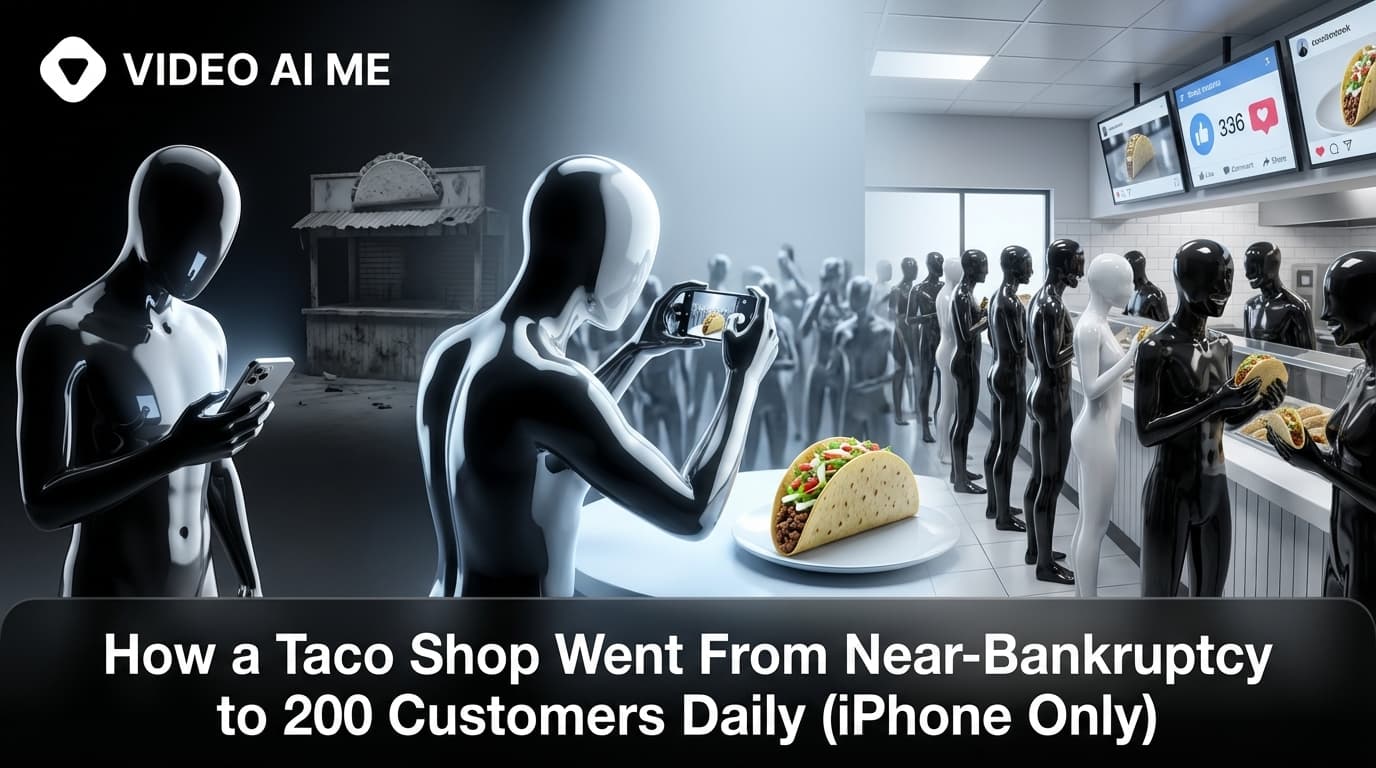
Maria's Taqueria was three weeks from closing.
After 12 years serving the same neighborhood, rising rent and declining foot traffic had squeezed them to the edge. Maria had already told her staff to start looking for other jobs.
Then her daughter Elena, home from college for winter break, asked a question that changed everything: "Mom, why aren't you on TikTok?"
Maria didn't know what TikTok was. She didn't care about social media. She just wanted to keep her restaurant alive.
Elena posted her first video that night. Just her phone pointed at her mom making salsa from scratch, no editing, no music, no strategy.
That video got 47,000 views.
Six months later, Maria's Taqueria serves 200+ customers daily. They just signed a lease for a second location. And they still haven't spent a dollar on advertising.
Why Restaurant Video Content Works Different Than Other Industries
Restaurants have something most businesses don't: inherently visual, emotionally compelling content that creates itself every single day.
Every sizzle, every pour, every customer's first bite is potential content. You're not manufacturing something interesting. You're just capturing what already happens.
According to The Rail, video content significantly boosts restaurant visibility by showcasing food preparation, introducing staff, and sharing customer experiences. But most restaurants still aren't doing it.
Why? Because they think they need:
- Professional equipment
- Editing skills
- A "strategy"
- Time they don't have
Maria's success proves none of that matters. What matters is showing up authentically and letting the food speak for itself.
The Content Strategy That Saved Maria's Taqueria
Elena's approach wasn't sophisticated. It was consistent and authentic. Here's exactly what she posted:
Week 1-2: Finding What Works
Day 1: Mom making salsa (47K views) Day 2: Close-up of tacos being plated (12K views) Day 3: Empty restaurant, caption "We need customers" (89K views) Day 4: Regular customer saying his order (23K views) Day 5: How they make fresh tortillas (156K views)
The tortilla video went semi-viral. More importantly, it showed them what their audience wanted: process content. Watching food being made from scratch.
Week 3-4: Doubling Down on What Works
Elena started posting 2-3 times daily, all focused on:
- Prep work in the kitchen
- Ingredients being prepped
- Food being assembled
- Customer reactions
Results: Follower growth from 0 to 8,400. First customers started mentioning they found them through TikTok.
Month 2-3: Building the Community
Content evolved to include:
- Regular customer spotlights
- Staff introductions
- "Secret menu" items
- Behind-the-scenes moments
- Responding to comments with videos
Results: 34,000 followers. Daily TikTok customers went from 2-3 to 15-20.
Month 4-6: Compounding Growth
By this point, content created itself:
- Customers asked to be featured
- Staff started making their own videos
- Local food bloggers reached out
- Media coverage started
Results: 127,000 followers. 200+ daily customers. Waitlist on weekends. Second location in development.
The 5 Video Types That Work for Any Restaurant
Based on Maria's success and industry research from Fishbowl, these content types consistently perform:
Type 1: Process Videos
Show food being made. That's it. No talking necessary.
Examples:
- Tortillas being pressed and cooked
- Meat being sliced
- Sauce being poured
- Final dish being assembled
Why it works: Food process videos are hypnotic. They trigger ASMR-like responses. People will watch a 60-second video of cheese melting without thinking about it.
How to film: Phone on a small tripod or propped against something stable. Natural kitchen lighting. Shoot 2-3x more footage than you need, pick the best moments.
Type 2: Behind-the-Scenes Reality
Show what really happens in a restaurant. The chaos, the camaraderie, the early morning prep, the end-of-night cleanup.
Examples:
- 5 AM prep routine
- Rush hour kitchen action
- Staff meal traditions
- What happens when you're closed
Why it works: People are fascinated by what goes on behind the scenes of any operation. It humanizes your restaurant and builds connection.
How to film: Candid footage. Don't stage it. Let staff be themselves. The imperfection is the appeal.
Type 3: Customer Moments
Feature real customers having real experiences.
Examples:
- First-time reactions
- Regular customers and their orders
- Special celebrations (birthdays, anniversaries)
- Customer reviews recorded on the spot
Why it works: Social proof in action. Potential customers see people like them enjoying your restaurant.
How to film: Always ask permission. A simple "Can I film you trying this?" works. Most people love being featured.
Type 4: Staff Spotlights
Introduce the humans behind the food.
Examples:
- "Meet our chef"
- Staff sharing their favorite menu item
- Why they work here
- Fun facts about team members
Why it works: People connect with people. When customers feel like they know your staff, they feel loyal to your restaurant.
How to film: Casual interviews. 30-60 seconds. Let personality shine through. Don't script it.
Type 5: Menu Education
Explain menu items, ingredients, or how to order.
Examples:
- "How to build the perfect taco"
- "What's actually in our secret sauce"
- "Menu items you didn't know you could order"
- "The right way to eat [dish name]"
Why it works: Reduces friction for new customers. Makes them feel like insiders.
How to film: Can be the owner/chef talking to camera, or text overlay on food footage.
Platform Strategy for Restaurants
Different platforms serve different purposes. Here's how to prioritize:
TikTok: Discovery Engine
Best for: Reaching new customers who don't know you exist Content style: Raw, authentic, trend-aware Posting frequency: 1-3 times daily for growth Length: 15-60 seconds Key metric: Views and profile visits
Instagram Reels: Local Connection
Best for: Connecting with local community, existing customers Content style: Slightly more polished, but still authentic Posting frequency: Once daily or every other day Length: 15-60 seconds Key metric: Saves, shares, and DM inquiries
Facebook: Community Building
Best for: Older demographic, community groups, events Content style: Can be longer form, more informational Posting frequency: 3-5 times per week Length: Up to 3 minutes acceptable Key metric: Shares and comments
According to research cited by Grubhub, about 60% of Americans aged 18-54 use Facebook daily or weekly, making it essential for broad local reach.
Google Business Profile: Conversion
Don't forget: Videos on your Google Business Profile appear in local search results. Upload your best content there too.
Common Mistakes Restaurants Make With Video
Mistake 1: Waiting for "Perfect"
The restaurant waits until they have proper lighting, a clean kitchen, the perfect dish presentation.
Result: They never post.
Fix: Post today. Imperfect content that exists beats perfect content that doesn't. You can improve over time.
Mistake 2: Making Ads Instead of Content
Videos that feel like commercials: "Come to our restaurant! We have great food! Open 7 days a week!"
Result: Nobody watches. Nobody shares.
Fix: Make content people would watch even if they weren't hungry. Entertain or educate first. The restaurant promotion is secondary.
Mistake 3: Inconsistency
Posts three videos in one week, then nothing for two months.
Result: Algorithm stops showing your content. Audience forgets you exist.
Fix: Sustainable pace. Better to post 3x weekly consistently than 3x daily for a week then burning out.
Mistake 4: Ignoring Comments
People comment and message. No response.
Result: Community doesn't form. Engagement drops.
Fix: Respond to every comment in the first hour. Use comments as video topic ideas. Build relationships.
Mistake 5: Only Showing Food
Every video is just food photos or plating shots.
Result: Looks like every other restaurant. No differentiation.
Fix: Show people. Show process. Show personality. Food is part of it, not all of it.
Scaling Beyond Organic: When to Add Paid and AI
Maria's story is organic growth. But there are times when paid promotion and AI tools accelerate results:
When to Boost Posts
Once you identify videos that perform well organically (high view count, lots of engagement), invest $20-50 to boost them locally. You're amplifying proven content, not gambling on untested ideas.
When to Use AI Video Tools
Tools like VIDEOAI.ME work well for restaurants in specific scenarios:
- Menu video boards: Professional explainers for each menu category
- Multilingual content: Reach different community groups in their language
- Promotional announcements: New hours, special events, holiday closures
- Hiring videos: Scale recruitment messaging
For core brand content, stick with authentic phone footage. Use AI for supplemental content that needs consistent, professional delivery.
When to Invest in Production
After you've validated what content works through organic testing, then consider:
- Higher quality food photography/videography
- Branded content templates
- Professional editing for hero videos
But only after you know what resonates with your audience.
The Numbers: What's Possible
Maria's results aren't typical, but they're not unicorn status either. Here's what realistic restaurant video marketing can achieve:
Conservative estimate (consistent effort, average content):
- Month 1: 500-2,000 followers
- Month 3: 2,000-8,000 followers
- Month 6: 5,000-20,000 followers
- Revenue impact: 10-15% increase in traffic
Aggressive estimate (daily posting, strong content):
- Month 1: 2,000-10,000 followers
- Month 3: 10,000-50,000 followers
- Month 6: 30,000-150,000 followers
- Revenue impact: 30-50% increase in traffic
According to MGH research cited by Toast, 36% of TikTok users have visited or ordered from a restaurant after seeing it on TikTok. That conversion rate is remarkably high for any marketing channel.
Your Restaurant Video Action Plan
-
Commit to 30 days - Post once daily for 30 days minimum before deciding if it "works." One week isn't enough data.
-
Start with process videos - Film food being made. This is the easiest content with highest floor of engagement.
-
Feature your people - Introduce staff. Spotlight regular customers. Show the humans behind the food.
-
Engage aggressively - Respond to every comment. Reply with videos when possible. Build community.
-
Track what works - Note which content gets views versus actual customers mentioning TikTok. Optimize for real-world results.
Ready to create professional video content for your restaurant? Create your first video now →
Related Reading
Frequently Asked Questions
Do restaurants really need video marketing?
According to research, restaurants using video content see 33% higher engagement than those using only photos. More importantly, 36% of TikTok users have visited or ordered from a restaurant after seeing video content about it. Video isn't optional anymore.
What equipment do restaurants need for video marketing?
A smartphone is enough. Seriously. The most successful restaurant content looks authentic and homemade. Professional equipment often makes content feel too polished and less trustworthy. Natural lighting and a stable hand are more important than expensive gear.
How often should restaurants post video content?
Aim for 3-5 posts per week minimum. Daily posting is ideal for growth phases. Consistency matters more than perfection. One okay video every day beats one perfect video per week.
What type of restaurant video content performs best?
Behind-the-scenes food preparation, customer reactions, staff spotlights, and 'secret menu' reveals consistently outperform generic food photos. Content showing personality and process beats polished promotional content.
Should restaurants pay for video production?
Not initially. Organic, authentic content typically outperforms professionally produced videos for local restaurants. Invest in production only after you've validated which content types resonate with your audience through organic testing.
Can restaurants use AI video tools effectively?
Yes, for specific purposes. Tools like VIDEOAI.ME work well for menu explainers, promotional announcements, and multilingual content. However, core content should still feature real staff, real food, and real customers for authenticity.
Frequently Asked Questions
Share
AI Summary

Ready to Create Professional AI Videos?
Join thousands of entrepreneurs and creators who use VIDEO AI ME to produce stunning videos in minutes, not hours.
- Create professional videos in under 5 minutes
- No video skills experience required, No camera needed
- Hyper-realistic actors that look and sound like real people
Get your first video in minutes
Related Articles
What Is MiniMax H3? The Video Model Explained
MiniMax H3 is a multimodal video model that turns a written brief into a short clip with synchronised sound. Here is what it does, what it does not, and who it suits.
A Same Day Workflow for AI Video Ad Creative
A full day plan that takes an offer from brief to launched creative, built around fast drafting, one round of judgement, and finishing only what survives.

How to Run MiniMax H3 Without a GPU
MiniMax H3 has public weights, so people try to self host it. Here is what that actually costs in hardware and time, and the browser route if you just want the clips.