
Kling AI for Stock Footage: How to Build a Custom Library That Kills Your Shutterstock Bill
Custom Kling 3.0 multi-shot clips are cheaper, more on-brand, and more unique than stock libraries. How to build a custom stock library, what to generate, and the cost math that ends the debate.
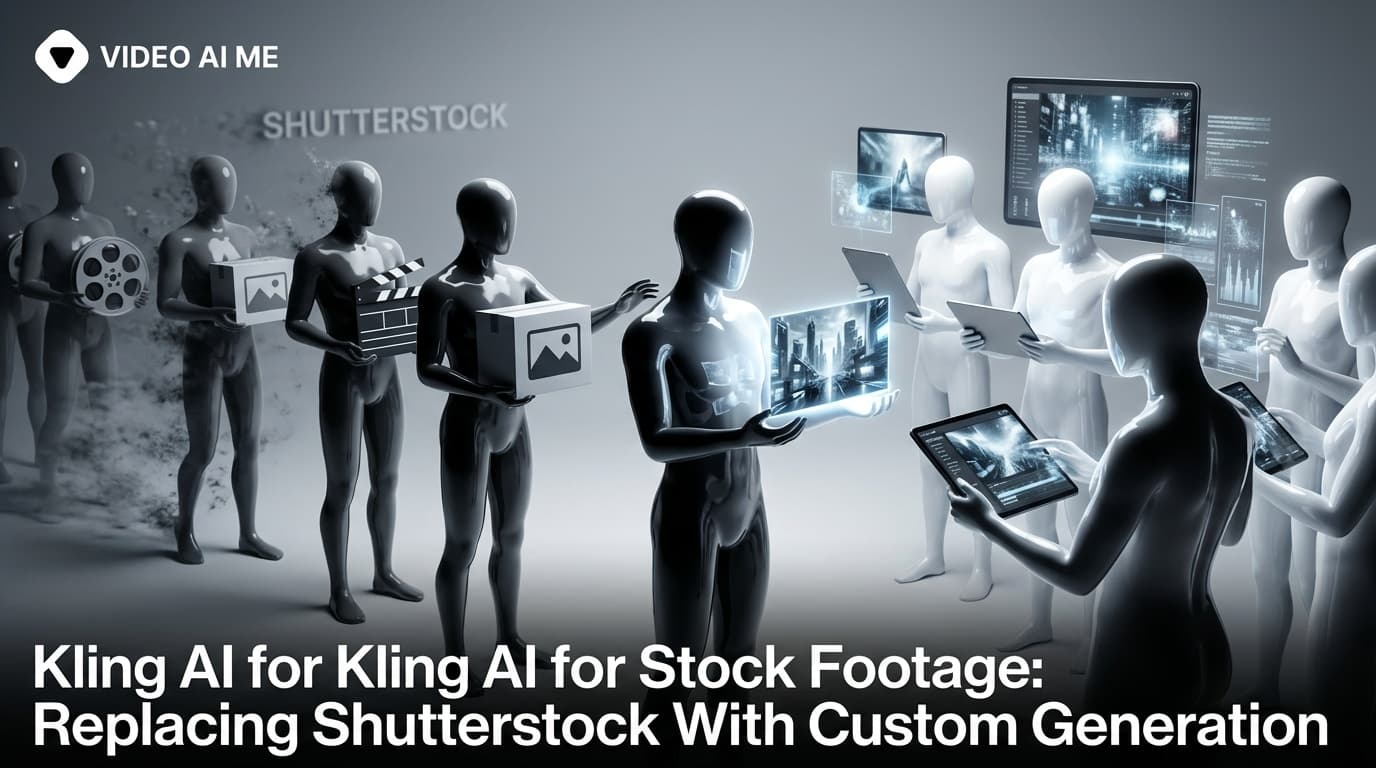
The End Of Generic Stock
For years the only way to build a library of short clips was a stock subscription. Shutterstock, Storyblocks, Pexels, Adobe Stock. The clips were serviceable but everyone else used the same ones. The watchful viewer can spot a stock clip instantly because they have already seen it in a hundred other ads, presentations, and websites.
Kling 3.0 on VIDEOAI.ME changes this equation permanently. Custom stock generation is now cheaper than stock libraries, faster to acquire, and the clips are unique to your project. No more recognizable stock faces that appear in five competitor ads. No more identical city skyline that every SaaS company uses in their hero section.
According to HubSpot, user-generated and custom content drives 6.9x higher engagement than generic brand content. The same principle applies to stock footage: audiences subconsciously recognize recycled clips, and it undermines trust before a single word is read. Custom clips feel intentional and on-brand because they are.
The Cost Argument Is Over
Let us run the numbers side by side.
| Service | Monthly cost | Clips included | Cost per clip |
|---|---|---|---|
| Shutterstock Video (10 clips) | $99 | 10 | $9.90 |
| Adobe Stock Video (10 clips) | $79 | 10 | $7.90 |
| Pond5 (per clip) | per use | 0 | $25 to $200 each |
| Storyblocks (unlimited HD) | $30 | unlimited HD only | varies |
| VIDEOAI.ME Pro plan (Kling 3.0) | $99 | Unlimited | Included |
On the same $99 monthly budget, VIDEOAI.ME with Kling 3.0 produces unlimited custom clips versus Shutterstock's 10 generic ones. And with Kling 3.0 multi-shot, each generation produces 2 to 4 related clips with matched lighting and color.
Over a year, the comparison is even more stark. $1,188 on Shutterstock gives you 120 clips total. The same $1,188 on VIDEOAI.ME gives you unlimited clips, all in your brand palette, all unique to your project, all generated on demand whenever you need them.
For teams that use stock footage regularly - content agencies, marketing departments, course creators, podcast producers - this is not a marginal improvement. It is a category shift.
What To Generate For A Stock Library
Not every category benefits equally from AI generation. Build your library around the categories Kling 3.0 handles best and keep stock subscriptions for the edge cases.
Kling 3.0 excels at:
- Cinematic urban shots (generic skylines, streets, alleys, rooftops at various times of day and weather).
- Office and workplace b-roll (people at laptops, meetings, hands on keyboards, collaboration scenes).
- Kitchen and food (pours, flips, plating, ambient kitchen scenes, steam, condensation).
- Nature texture (waves, leaves, rain, dust, light beams, golden hour landscapes, macro flora).
- Abstract and macro (liquid, swirls, particles, light play, ink drops, bokeh).
- Lifestyle (people walking, jogging, reading, sitting in cafes, commuting).
- Fashion and beauty (models posing, fabric movement, close-ups of materials and textures).
Stick with traditional stock for:
- Specific recognizable landmarks and named locations.
- Crowds of more than 6 to 8 people with visible faces.
- Fine motor detail (handwriting, threading, surgery, instrument playing).
- Real brand text or logos visible in frame.
- Historical or documentary footage.
- Specific cultural events with authentic detail.
- Real scientific or medical imagery.
For most marketing and content teams, the AI-strong categories cover 85 to 95 percent of usage. The traditional-stock categories are edge cases.
A Library Build Plan: One Afternoon, 50+ Clips
A full custom stock library for a brand takes one afternoon with Kling 3.0 multi-shot on VIDEOAI.ME. Here is the step-by-step plan.
60 minutes: Plan the library. Open your Shutterstock search history or think through the clips you always need. List every category you typically search for. For each category, list 3 to 5 multi-shot scenes you want. Each scene will produce 2 to 4 clips.
A typical brand library plan looks like this:
- Office (4 multi-shot scenes = 12 to 16 clips)
- Kitchen/Food (3 scenes = 9 to 12 clips)
- Urban/City (3 scenes = 9 to 12 clips)
- Nature/Outdoor (3 scenes = 9 to 12 clips)
- Abstract/Macro (3 scenes = 9 to 12 clips)
- Lifestyle (2 scenes = 6 to 8 clips)
That is 18 multi-shot generations producing 54 to 72 individual clips.
90 minutes: Generate. Write multi-shot prompts for each scene and run them on VIDEOAI.ME.
Sample multi-shot generation for the "office productivity" category:
Master Prompt: Clean editorial style, soft natural daylight. Modern minimalist office. Palette: white, oat, soft blue, charcoal. Negative: warping screens, jittery hands, distortion.
Multi shot Prompt 1: Top-down close-up of hands typing on a MacBook keyboard, natural rhythm, notebook and coffee cup beside, 0-5s.
Multi shot Prompt 2: Over-the-shoulder medium shot of someone scrolling a bright dashboard on their laptop, soft bokeh background, 0-5s.
Multi shot Prompt 3: Wide shot of a modern desk with laptop, coffee, plant, and notebook, gentle sunlight moving across the desk surface, locked-off, 0-5s.
Sample for "nature texture":
Master Prompt: Cinematic, locked-off. Golden hour natural light. Outdoor environment. Palette: gold, deep green, amber. Negative: jittery motion, warping surfaces.
Multi shot Prompt 1: Macro close-up of morning dew on a green leaf, each droplet catching golden light, 0-5s.
Multi shot Prompt 2: Medium shot looking up through tree canopy, sunlight filtering through leaves with subtle movement, 0-5s.
Multi shot Prompt 3: Wide shot of a meadow with wildflowers, gentle breeze creating waves in the grass, golden hour, 0-5s.
30 minutes: Organize and tag. Save each clip with a descriptive filename and a copy of the prompt that produced it. Organize into folders by category.
15 minutes: Build a search sheet. A simple spreadsheet listing every clip with category, prompt, mood, and color palette for easy retrieval later.
By end of day you have a 50+ clip custom library. All in your brand palette. All unique to your project.
Brand Palette Discipline: The Secret To Visual Coherence
The single biggest unlock for a custom library is brand palette discipline. When you generate every clip in your brand colors, the entire library feels coherent. Cuts between clips look intentional. The library starts to feel like a unified film aesthetic, not a random assortment of stock.
Name your brand palette anchors and include them in every master prompt:
... Palette: oat, soft blue, walnut, cream.
Do this on every generation and your stock library starts to feel custom-shot for your brand by a single cinematographer with a consistent eye. That visual coherence is worth more than any individual clip.
According to Bazaarvoice, visual consistency across marketing touchpoints increases consumer trust and drives higher conversion rates. The same principle applies to video: when every piece of b-roll and stock footage shares a visual language, the brand feels more intentional and trustworthy.
Where Custom Stock Wins Over Library Stock
- Brand consistency. Every clip matches your color palette and visual language.
- Visual uniqueness. No competitor has the same clip. Zero chance of the "stock photo model" effect.
- Cost. Order of magnitude cheaper for high-volume teams.
- Speed. Need a clip you do not have? Generate it in 5 minutes. No searching, no licensing, no downloading.
- Customization. Need a slightly different version? Tweak the prompt and reroll. Need it warmer? Adjust the palette. Need a different angle? Change the framing.
- Multi-shot cohesion. Related clips come pre-matched from a single generation, so they cut together seamlessly.
Where Library Stock Still Wins
- Specific named locations. Real landmarks and recognizable places need real cameras.
- Real human emotional authenticity that only real cameras in real moments capture.
- Large crowd scenes with 8+ people and authentic diversity.
- Documentary and historical footage. Archival material cannot be generated.
- Specific cultural events and ceremonies. Real celebrations require real documentation.
For most marketing and content teams, these cases represent 5 to 15 percent of total stock usage. The other 85 to 95 percent is prime territory for custom Kling 3.0 generation.
How VIDEOAI.ME Builds Stock Libraries
Inside VIDEOAI.ME the stock workflow has a category dropdown and a brand palette setting. Pick a category, the system writes the Kling 3.0 multi-shot prompt scaffolding, you confirm and generate. Every clip comes back in your brand palette and is automatically tagged for retrieval.
For related b-roll workflows see Kling AI for background b-roll and Kling AI product video prompts. For prompt optimization, see Kling 3.0 prompt guide.
Cancel Your Stock Subscription This Month
If you are still paying Shutterstock $99 per month for 10 generic clips, you are leaving money and creative control on the table. Build a custom Kling 3.0 library this afternoon on VIDEOAI.ME and cancel the subscription on Friday.
Try VIDEOAI.ME free and generate your first 20 custom stock clips today.
The Replenishment Workflow: Keeping Your Library Fresh
A custom stock library is not a one-time project. As you use clips and as your content needs evolve, you need to replenish. The advantage of Kling 3.0 over traditional stock is that replenishment is instant.
Monthly review (15 minutes). Check which clips you used most often. Which categories ran out? Which moods are missing? Add 5 to 10 new multi-shot scenes to fill the gaps.
Seasonal refresh (30 minutes). Every quarter, generate 5 to 8 seasonal scenes. Summer light, autumn colors, holiday warmth, spring freshness. These seasonal clips keep your content feeling current without requiring a new photoshoot.
Project-specific generation (5 minutes). When a specific project needs a clip that does not exist in your library, generate it on VIDEOAI.ME in 5 minutes. This is the speed advantage that no stock library can match: custom clips on demand.
According to Wyzowl, 91% of businesses use video as a marketing tool. The teams that scale video production fastest are the ones with robust, well-organized stock libraries. With Kling 3.0, building and maintaining that library costs a fraction of what stock subscriptions charge.
The Agency Use Case: Client-Specific Libraries
For creative agencies, the custom stock workflow takes on an additional dimension. You can build a unique stock library for each client, all in that client's brand palette, and use those clips across every project for that client.
A client-specific library of 30 to 50 clips takes about an hour to build. The clips then appear in every presentation, every ad creative, and every social post you produce for that client. The visual consistency makes every deliverable feel more premium and intentional.
The cost of building a client-specific library on VIDEOAI.ME is included in your plan. Compare this to the per-clip licensing fees on Shutterstock that eat into project margins with every download.
Quality Control: What Makes A Stock Clip Usable
Not every Kling 3.0 generation makes it into your library. Here is the quality checklist for deciding whether a clip passes muster for stock use.
Motion quality. The motion should be smooth and continuous. Any jitter, warping, or sudden acceleration means the clip fails. Reroll with a simpler motion directive.
Edge integrity. Check the edges of objects in frame. Melted edges, doubled outlines, or ghosting on moving objects are instant rejects. The negative prompt helps prevent these but does not eliminate them entirely.
Color consistency. The color should match your brand palette throughout the clip. A clip that starts warm and drifts cool within 5 seconds is unusable. Kling 3.0 multi-shot generally maintains color better than single-shot, which is another reason to use multi-shot for stock generation.
Loop potential. If the clip is intended for looping, check whether the beginning and end can be joined seamlessly. Clips with a clear directional movement (a pour, a walk) are harder to loop than ambient motion (steam, dust, flame).
Resolution and sharpness. The clip should be sharp enough for your target display size. A clip that looks good on a phone may show artifacts when projected on a conference room screen. Generate at the highest available resolution.
Expect about 70% to 80% of your Kling 3.0 generations to pass quality control for stock use. The remaining 20% to 30% get rerolled with adjusted prompts. This hit rate improves as you develop a feel for what works.
Frequently Asked Questions
Share
AI Summary
Paul Grisel
Paul Grisel is the founder of VIDEOAI.ME, dedicated to empowering creators and entrepreneurs with innovative AI-powered video solutions.
@grsl_frReady to Create Professional AI Videos?
Join thousands of entrepreneurs and creators who use VIDEO AI ME to produce stunning videos in minutes, not hours.
- Create professional videos in under 5 minutes
- No video skills experience required, No camera needed
- Hyper-realistic actors that look and sound like real people
Get your first video in minutes
Related Articles
A Same Day Workflow for AI Video Ad Creative
A full day plan that takes an offer from brief to launched creative, built around fast drafting, one round of judgement, and finishing only what survives.
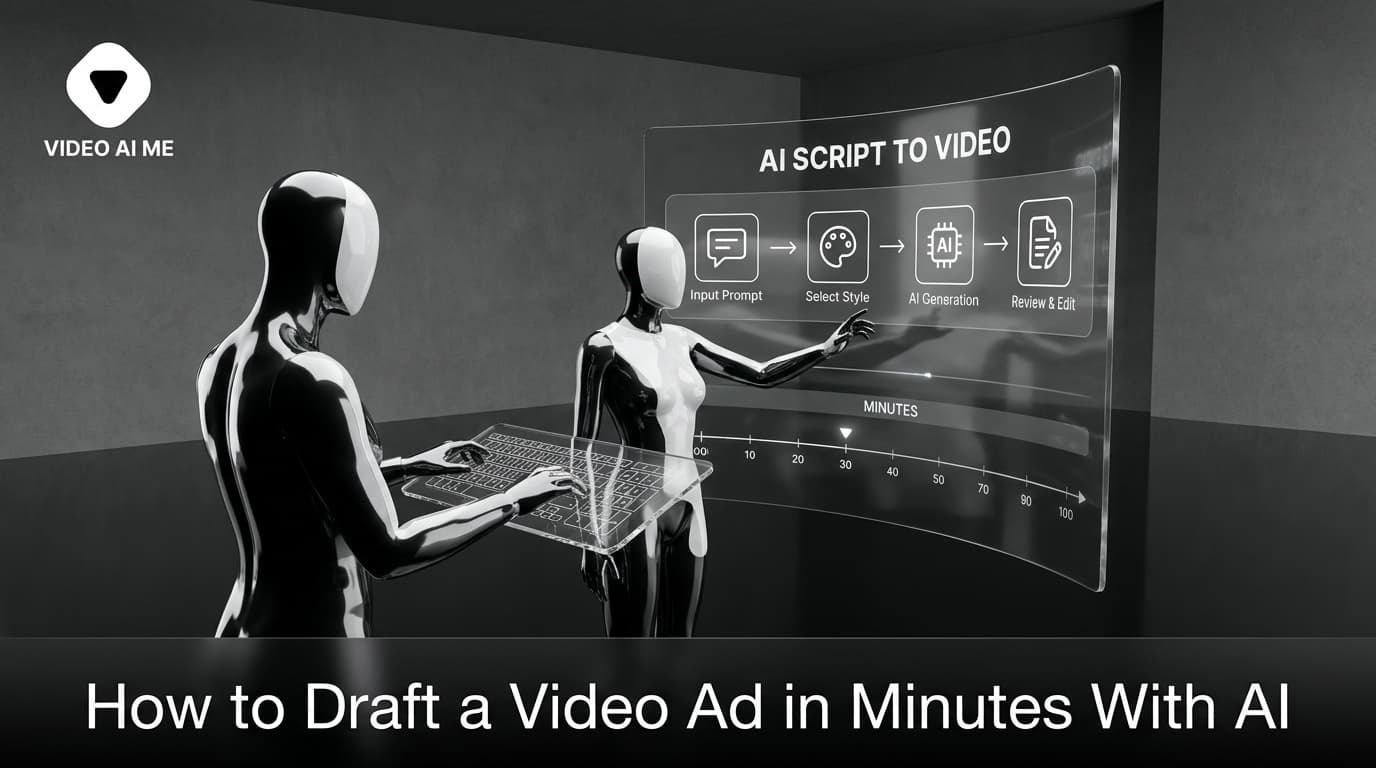
How to Draft a Video Ad in Minutes With AI
A repeatable routine for going from a product page to six testable video ad drafts in one sitting, using a fast model and single variable rewrites.
How Many Video Ad Variations Should You Test?
How many creatives a test actually needs, how different they have to be, and why the right number is set by what you can afford to produce.