
Paper-Collage Explainer Video Ads That Convert
Paper-collage explainer video ads read as editorial, not advertising, so people watch. Here is why the format converts and how to brief one that sells.
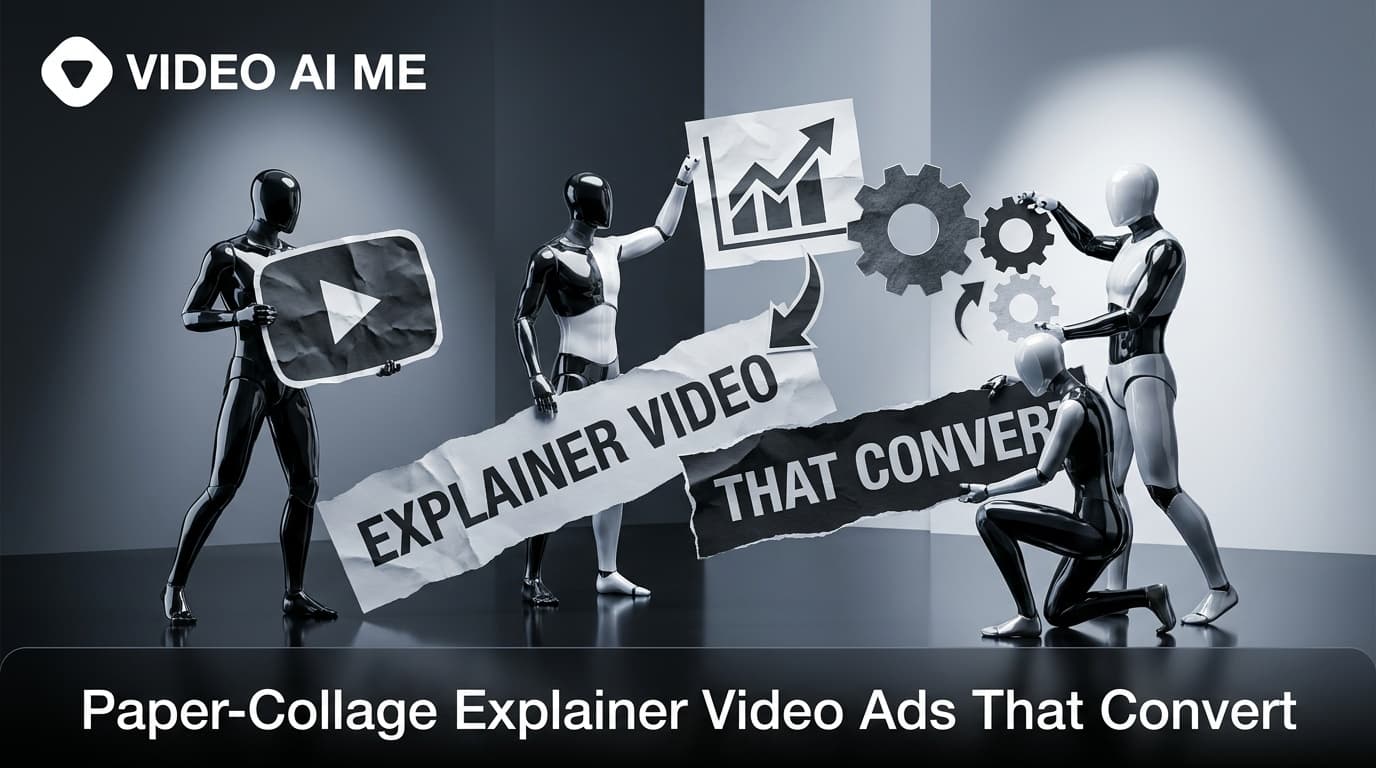
Paper-collage explainer video ads are winning attention that polished ads cannot buy. Built in the vox editorial style, torn paper, hand-cut illustrations, cutout labels, and narration, they look like something to learn from, not something to skip. That is exactly why they convert as paid creative, and why media buyers have started running them at scale.
Why the paper-collage explainer video format holds attention
A feed is a war for the first three seconds. Most ads lose because the viewer's brain flags them as ads and moves on. A paper-collage explainer video sidesteps that reflex. The handmade, editorial look signals content, so the viewer gives it a chance, and once the narration starts teaching, they stay.
Watch time is the currency of paid social. The longer people watch, the more of your message lands and the cheaper the platform tends to distribute your ad. The editorial look is a watch-time engine, which is what makes the 3-layer UGC creative framework for Meta so effective when paired with this format.
The mechanism advantage
Most products fail in ads not because the offer is weak but because the viewer never understood what the thing does. Paper-collage explainer video ads are built for exactly this moment. Arrows, cutout diagrams, and labels turn an abstract benefit into something you can see.
That makes the format a natural fit for anything with a how-it-works story: a supplement's mechanism, a SaaS workflow, a fintech product, an app that saves time. If your ad needs a demonstration, not just a claim, the collage explainer earns its place.
Paper-collage explainer video vs the usual suspects
| Approach | What it is | Strength | Weakness |
|---|---|---|---|
| Paper-collage explainer | Editorial cutout explainer | Watch time, explains mechanism | Not a personal testimonial |
| Talking-head UGC | Creator or avatar to camera | Trust, social proof | Feels like an ad faster |
| Motion graphics | Polished vector animation | On-brand set-pieces | Slow and costly to iterate |
Read that as a portfolio, not a competition. Run a paper-collage explainer for the how-it-works job and a talking-head for the testimonial job, and let the data split budget. Our comparison of vox-style vs UGC ads goes deeper on when to reach for each.
How to brief a paper-collage explainer video ad that sells
A great ad in this format follows the same arc as any strong direct-response creative, expressed in cutout boards.
- Hook board. Lead with the problem or a surprising claim, not the product. This is where most ads lose the viewer.
- Problem board. Name the pain in plain words so the viewer feels seen.
- Reveal board. Introduce the product as the answer, as a clean paper cutout with a readable label.
- Mechanism board. Show how it works with arrows and labels. This is the format's superpower.
- Payoff and CTA board. The result, then one specific next step tied to your offer.
You do not have to design any of this. VIDEO AI ME's Vox-Style Explainer template writes the scene script from your brief, generates each collage board for you to approve, and animates them into a narrated ad with sound. You approve the visuals before any video credits are spent, so testing stays cheap.
Testing and scaling paper-collage ads
The reason AI-generated creative matters for performance is volume. Creative fatigue is a silent killer on paid social, and the only durable answer is a steady pipeline of fresh variations. Because you can regenerate boards and re-cut in minutes, you can:
- Test five to ten hook boards against the same body
- Swap the call-to-action board without rebuilding the ad
- Produce native vertical cuts for TikTok and Reels from the same brief
That is the same discipline that powers AI UGC ads at scale without creators, applied to an editorial format.
Where to run them and what to expect
Run vertical 9:16 cuts on TikTok and Instagram Reels, and use the same asset in Meta and TikTok ad accounts. Post them organically too; the format was born on organic feeds and still performs there. Lead with a sound-on hook, keep the labels legible on a small screen, and end with one clear action.
Common mistakes with paper-collage ads
A few avoidable mistakes hold back paper-collage explainer ads. The first is leading with the product instead of the problem. When the item appears before any tension exists, the viewer has no reason to keep watching. Open on the pain and let the product arrive as the answer.
The second is inconsistent style between boards, which makes the ad feel disjointed and cheap. Hold one palette, backdrop, and paper texture across every scene. The third is forgetting the mute majority: if your cutout labels are not legible on their own, most of your paid audience misses the message entirely. Keep labels short and bold, and make sure each one echoes its narration line. The fourth is no clear ask. An editorial explainer still needs one specific call to action, or the watch time you earned goes nowhere. Avoid those four and the format does what it does best: hold attention and explain.
Build your first paper-collage ad
Stop guessing whether the format works for your product and make one. Open the Vox-Style Explainer template, give it a two-line brief, approve the boards, and put the finished ad into your next test. Compare it against your current best creative and let watch time and cost-per-click settle the argument. Explore the full Templates gallery if you want to see the other pipelines first.
Frequently Asked Questions
Share
AI Summary

Paul Grisel
Paul Grisel is the founder of VIDEOAI.ME, dedicated to empowering creators and entrepreneurs with innovative AI-powered video solutions.
@grsl_frReady to Create Professional AI Videos?
Join thousands of entrepreneurs and creators who use VIDEO AI ME to produce stunning videos in minutes, not hours.
- Create professional videos in under 5 minutes
- No video skills experience required, No camera needed
- Hyper-realistic actors that look and sound like real people
Get your first video in minutes
Related Articles

A Same Day Workflow for AI Video Ad Creative
A full day plan that takes an offer from brief to launched creative, built around fast drafting, one round of judgement, and finishing only what survives.
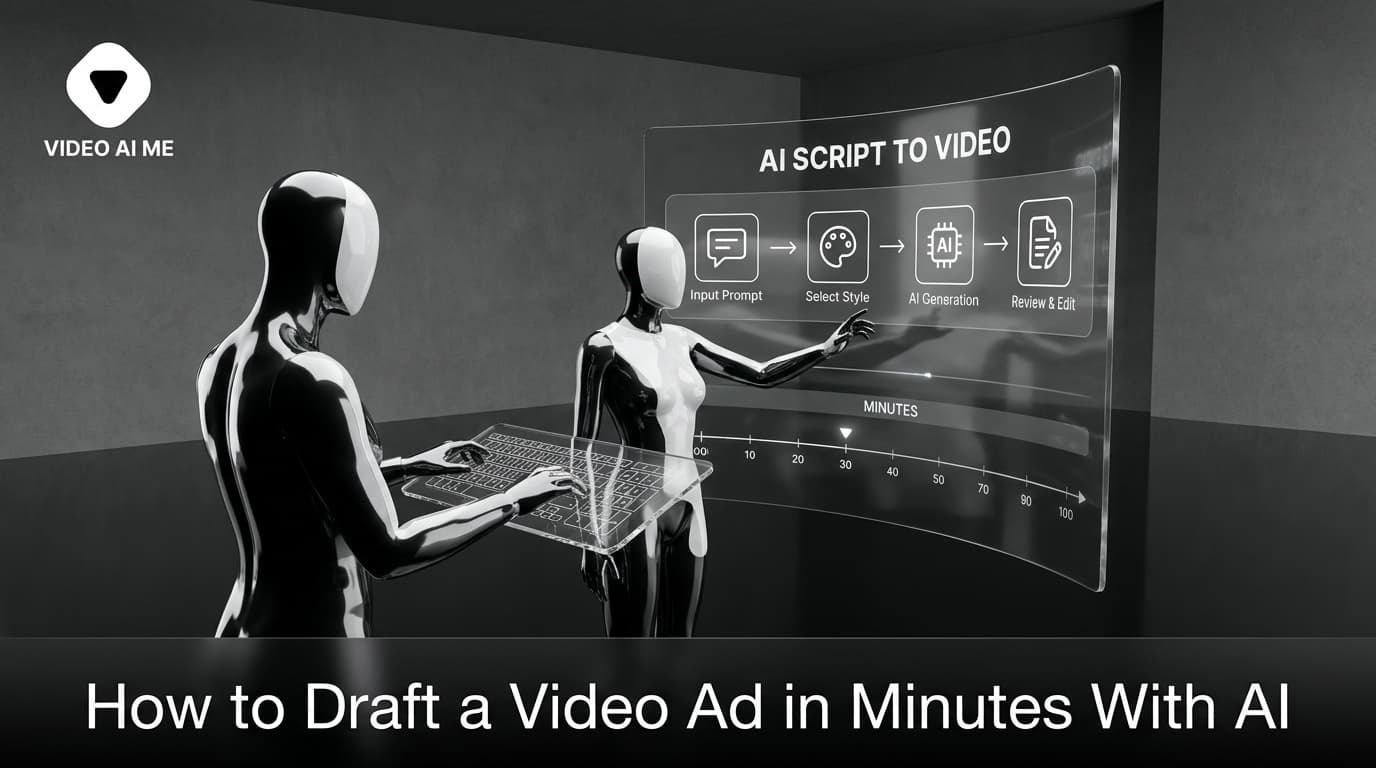
How to Draft a Video Ad in Minutes With AI
A repeatable routine for going from a product page to six testable video ad drafts in one sitting, using a fast model and single variable rewrites.

How Many Video Ad Variations Should You Test?
How many creatives a test actually needs, how different they have to be, and why the right number is set by what you can afford to produce.