
AI Before & After Videos for Skincare Ads (2026)
Build a compliant before after video skincare ad with AI. Get the format, a step-by-step workflow, FTC claim rules, and how to test variations without reshooting.
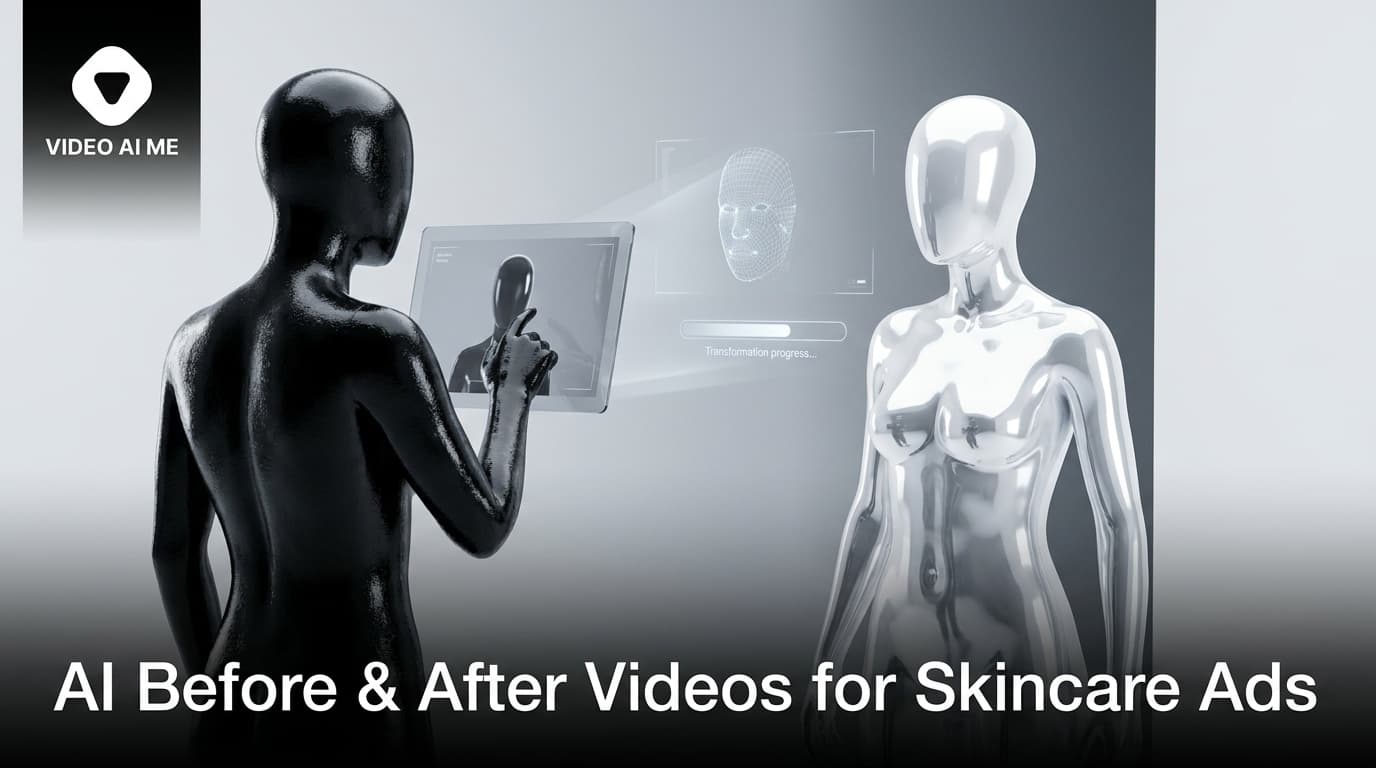
A before after video skincare ad is still the single most persuasive format in beauty marketing, because it shows the transformation instead of describing it. The problem in 2026 is not whether the format works. It is that filming a real, repeatable, compliant before and after takes weeks of consistent lighting, the same model, and results you can actually back up. This guide shows how to build a before after video skincare ad with AI, keep it truthful under FTC rules, and ship enough variations to actually find a winner on Meta and TikTok.
We will cover the format itself, a step-by-step workflow, the claims and compliance lines you must not cross, and how to test variations without reshooting. No invented stats, no fake transformations, just the structure that converts paying skincare customers.
Why the before after video skincare format converts
The reveal is the whole engine. By placing a "before" state next to an "after" state, you give the viewer a striking visual contrast and an emotional payoff at the moment of the reveal. That curiosity gap is what stops the scroll, and it is the reason the before after video skincare format has outlived almost every other beauty ad trend.
This is also why the format maps so cleanly to user-generated content. UGC-style before and after clips, close-up texture shots, and "no-makeup makeup" looks feel less like a polished commercial and more like a trusted recommendation from a real person. That perceived authenticity is the entire reason UGC outperforms brand-shot creative.
The numbers behind UGC back this up. UGC earns roughly 6.9x higher engagement than brand-created content, and shoppers who engage with UGC convert far more often than those who do not. A before and after is UGC with a built-in proof point, which is why beauty advertisers keep returning to it.
One important note from the ad-analysis research: before-after ads tend to run slightly longer and use a bit more primary text than other formats. The transformation needs context to feel credible, so do not strip it down to a two-second flash. Give the viewer enough to believe the result is real.
What a strong before and after skincare ad actually contains
Before you touch any tool, get the structure right. A before after video skincare ad that performs almost always includes these beats:
- A hook in the first 3 seconds (a question or a dramatic "before" shot)
- The struggle or real problem stated plainly ("my skin was dull and congested")
- The product shown in use, with texture and packaging close-ups
- The "after" reveal with a clean transition
- A compliant on-screen benefit ("smoother-looking in 4 weeks")
- A clear call to action telling the viewer exactly what to do next
Keep it to 15 to 60 seconds for TikTok, Instagram Reels, and YouTube Shorts. Shorter, punchier cuts (10 to 30 seconds) are usually your testing workhorses, with a slightly longer version for retargeting where you can earn the extra context.
The two layouts that work
| Layout | How it looks | Best for |
|---|---|---|
| Sequential reveal | Before clip, transition, after clip | TikTok and Reels storytelling |
| Side-by-side split | Before and after on screen at once | Quick-proof thumbnails and ad hooks |
Use a "wipe" or "dissolve" transition between states and label each segment with a "Before" and "After" text overlay so the contrast reads instantly, even on mute. Around 80% of viewers watch without sound, so captions and labels are not optional. A clean, well-labeled reveal beats a flashy edit that nobody can follow silently.
How to make a before after video skincare ad with AI (step by step)
Here is the practical workflow inside VIDEO AI ME. The goal is a UGC-style talking-head or demo that frames a real, substantiated transformation, not a fabricated miracle.
-
Define the honest claim first. Decide what you can actually prove ("hydration in 1 week," "fewer visible breakouts in 4 weeks") and write the on-screen text around that. The claim drives the script, not the other way around. If you cannot back it up, it does not go on screen.
-
Write a hook-problem-proof-CTA script. Open with the problem ("congested, dull skin"), introduce the routine, then earn the reveal. Keep the language conversational, like a friend explaining their routine, not a press release. The script should sound like something a real person would say in a bathroom mirror, not a brand deck.
-
Pick or create your AI actor. Generate an AI spokesperson from a photo or choose from the actor library. This actor narrates the routine and frames the before and after, which keeps a consistent face across every variation you test. Consistency of presenter is what makes a batch of ads feel like one campaign instead of ten random clips.
-
Add the before and after visuals. Drop in your real before and after footage or product texture shots, then bracket them with the AI actor's narration. The actor sells the story, the footage carries the proof. Keep lighting and angle identical across the two states so the contrast is honest.
-
Layer the transition, labels, and captions. Apply a wipe or dissolve between states, add "Before" and "After" labels, and turn on auto-captions so the ad lands on mute. Captions also boost watch time, which feeds the platform's reach.
-
Set the on-screen benefit text. Use the substantiated claim you defined in step one. Avoid absolute promises like "eliminates wrinkles" unless you have the science to back them. Softer, accurate wording converts almost as well and keeps you compliant.
-
Export vertical (9:16) and ship variations. Generate multiple hooks and openers from the same script so you have a real test, not a single guess. One ad is a coin flip; ten ads is a strategy.
For a deeper look at scripting beauty content specifically, see our skincare video marketing guide for ecommerce beauty brands and our walkthrough of UGC for skincare with AI video. If you are still choosing a tool, our roundup of the best AI UGC video generators compares the options for ad work.
The compliance line you cannot cross
This is the part most "how to make a before after video" articles skip, and it is the part that gets brands sued. Skincare claims are regulated, and before and after visuals draw extra scrutiny precisely because they imply a specific, measurable result.
The core rules from the FTC's Health Products Compliance Guidance:
- Every claim must be truthful, non-deceptive, and substantiated before the ad runs.
- Specific performance claims (for example, "reduces wrinkles 98%") require competent and reliable scientific evidence. Unsubstantiated performance claims are the most common trigger for FTC action.
- Before and after images and videos must accurately represent typical results, not a cherry-picked best case or an altered shot.
- Any material connection (paid creator, free product, sponsorship) must be disclosed.
There is one more layer specific to AI. If your "after" is an AI-generated face or an AI actor presented as a real customer testimonial, you can drift into deceptive-endorsement territory. The safe pattern, supported by FTC guidance, is to use AI actors as brand spokespeople presenting real, substantiated results, not as fake customers inventing a transformation that never happened. Label AI-generated content where required and keep the proof real.
For a fuller treatment of compliant claim wording, our skincare video marketing guide covers the safe phrasing in detail. When in doubt, describe what the product does, not a guaranteed outcome.
Testing before and after variations without reshooting
The reason AI is worth it here is not "free video." It is iteration speed. A serious DTC beauty brand wants 20 to 40 new variations a month to find winners, and you cannot reshoot a human model 40 times.
With an AI actor, the transformation footage and product shots stay fixed while you swap everything around them. Test these one variable at a time:
- Hooks: "Day 1 vs Day 28" versus "I almost gave up on my skin"
- Openers: dramatic before shot versus talking-head question
- On-screen claim wording: "smoother-looking" versus "more even-looking"
- CTA: "Shop the routine" versus "See real results"
- Length: 15s for cold traffic, 45s for retargeting
| Approach | Time to 10 variations | Cost driver | Compliance control |
|---|---|---|---|
| Hire a model per shoot | Weeks | Talent, studio, reshoots | Hard to re-vet each cut |
| AI before and after workflow | Hours | Compute per render | Same approved claim reused |
Because the substantiated claim and approved footage are reused across every cut, you also keep tighter compliance control. You are not re-vetting a fresh shoot each time, just remixing approved elements. That single habit prevents most of the accidental over-claiming that creeps in when a brand juggles dozens of one-off creator deliverables.
Pair this with a structured testing plan and you are running real creative experiments, not posting one before after video skincare clip and hoping it lands.
Ready to build compliant before and after skincare ads at scale? Create your first AI UGC video with VIDEO AI ME and ship variations in an afternoon.
Common mistakes that kill before and after skincare ads
A few patterns reliably tank performance or invite a regulator's attention:
- Over-promising. "Erases acne in 3 days" with no evidence is both unbelievable and non-compliant.
- Inconsistent before and after conditions. Different lighting, angle, or filter makes the transformation look faked, which destroys trust even when the result is real.
- Burying the hook. If the first 3 seconds do not signal a transformation, the scroll wins.
- No captions or labels. On mute, an unlabeled before and after is just two clips.
- One video, no testing. A single ad is a guess. The format rewards volume and iteration.
- Ignoring platform fit. A 60-second talking-head built for retargeting will underperform as a cold TikTok hook. Match the cut to the placement.
Fix these and the before after video skincare format does what it has always done best: it shows the proof and lets the result sell itself.
Final word
The before after video skincare ad is not going anywhere because it answers the one question every skincare buyer has: will this actually work on skin like mine? Your job is to answer it honestly, show it clearly, and test it enough to find the version that converts.
AI does not change the format. It changes how fast and how cheaply you can produce compliant, on-brand variations of it, so you can spend your energy on the claim and the hook instead of coordinating another reshoot. Start with one honest transformation, build the structure right, and let the volume of testing find your winner.
Frequently Asked Questions
Share
AI Summary
Paul Grisel
Paul Grisel is the founder of VIDEOAI.ME, dedicated to empowering creators and entrepreneurs with innovative AI-powered video solutions.
@grsl_frReady to Create Professional AI Videos?
Join thousands of entrepreneurs and creators who use VIDEO AI ME to produce stunning videos in minutes, not hours.
- Create professional videos in under 5 minutes
- No video skills experience required, No camera needed
- Hyper-realistic actors that look and sound like real people
Get your first video in minutes
Related Articles

AI Shopify Product Launch Video: 2026 Playbook
A model-agnostic launch playbook for building an AI Shopify product launch video stack: 3 phases, a 7-step workflow, and how many UGC ad variations to ship.
AI Video API for E-Commerce Builders (2026)
How developers wire AI video APIs into Shopify, WooCommerce, and headless stacks to generate product videos at scale. Endpoints, costs, and integration patterns.
AI Lip Sync + Multilingual Video for E-Commerce 2026
How DTC brands use AI lip sync and voice cloning to ship the same product video in 30 languages from one shoot. Workflows, costs, and platform tips.