
Seedance 2.0 Character Consistency: Same Person Across Shots
Seedance 2.0 consistency keeps the same character across multiple shots and clips. Here is how to anchor a face, lock wardrobe, and use reference images for full control.
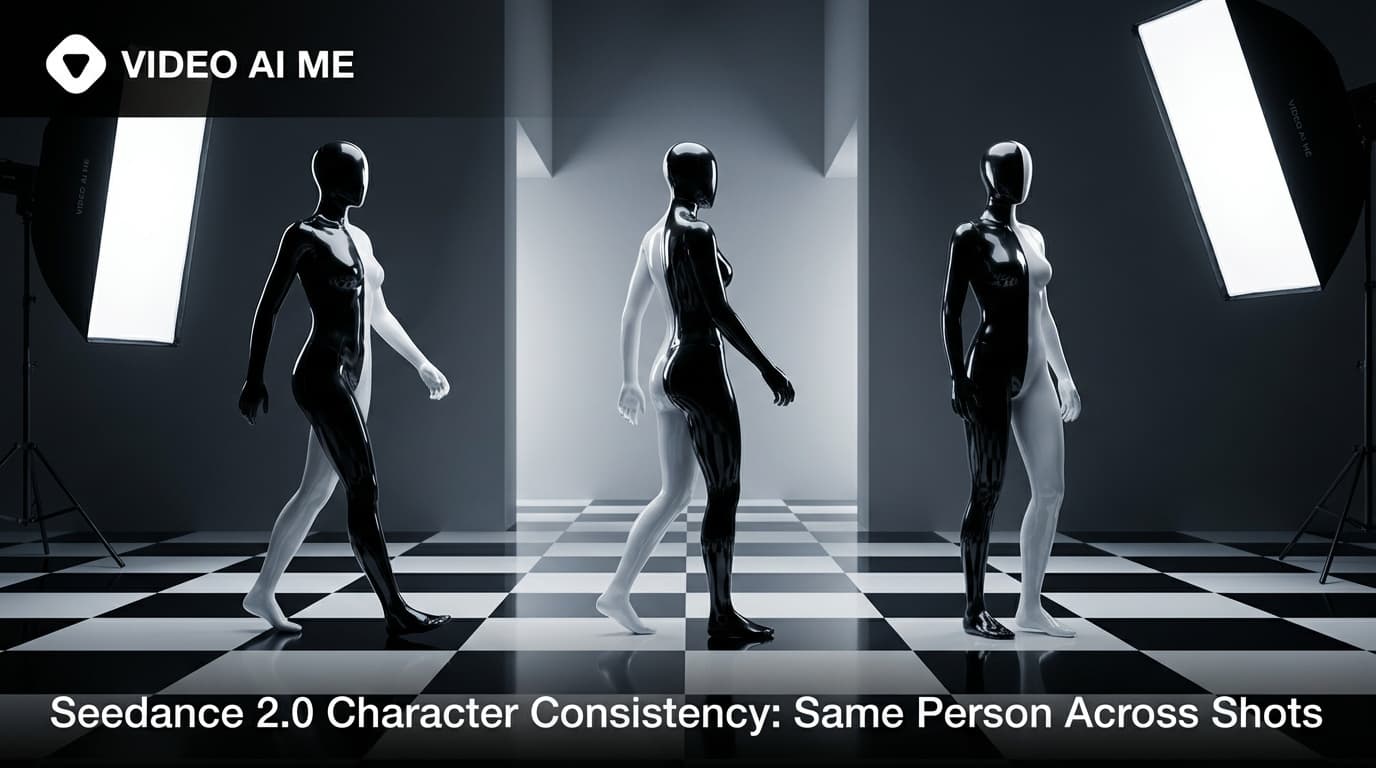
The same face, take after take
Character consistency is the wall most AI video creators hit by their second week. You generate a great clip of your founder pitching the product. You go to make a follow-up clip with the same person and the model returns someone who looks like a cousin. Same hair, similar face, but not the same person. Your campaign falls apart because every clip features a slightly different actor and nobody trusts the brand.
Seedance 2.0 character consistency is not perfect but it is the best we have seen in a generative model. With the right prompting and a reference image, you can keep the same character across multiple shots in one prompt and across multiple clips in a four-week campaign. The trick is knowing which lever to pull when.
This post walks through the four techniques for locking a character in Seedance 2.0: repeating descriptions, using reference images, voice cloning for audio consistency, and the multi shot trick where you anchor the face inside the same generation. By the end you should be able to ship a four-clip campaign with the same person across all four ads in under 30 minutes.
Why Seedance 2.0 character consistency is the hard problem
Seedance 2.0 character consistency is achieved by stacking four techniques: detailed written anchors (60 to 70 percent consistency), reference images via image-to-video (95+ percent), voice cloning for audio lock, and multi-shot anchoring for in-generation callbacks. Use more techniques for higher stakes. A one-off hook test needs only written anchors. A recurring brand ambassador across a 20-clip campaign needs all four.
Text prompts produce variance. The same paragraph generates slightly different output every time you run it because the model samples from a distribution. For background scenery this is fine. For a recurring face it is fatal. A recurring brand ambassador across ten clips with ten slightly different faces breaks the trust the campaign depends on.
The usual fix in older models was to give up and shoot real footage. That defeats the whole point of using AI. Seedance 2.0 finally has enough fidelity that with the right inputs you can hold a character stable across generations. It still requires effort but the effort is reasonable now.
The practical implication: if your campaign needs the same face, treat character consistency as a deliberate workflow, not an accident. Plan the inputs (description, reference image, voice clone) before you start generating.
Technique 1: detailed written anchors
The cheapest and weakest technique is to write a very detailed character description and reuse it word-for-word in every prompt. This gets you 60 to 70 percent consistency, which is enough for some campaigns and not enough for others.
A good written anchor includes:
- Age range (not exact age)
- Hair color, length, and style
- Eye color (optional)
- Distinctive feature (freckles, beard, glasses, scar)
- Body type and posture
- Wardrobe (shirt, jacket, accessory)
- Voice or mannerism cue if dialogue is involved
Example: "A woman in her late twenties with curly red hair pulled back, light freckles, bright green eyes, slim build, wearing a denim jacket over a white t-shirt, slight upward smile." This is the anchor. Reuse it verbatim in every shot block and every separate prompt. If you want to stress-test your own anchor, start a free project on VIDEO AI ME and run the same anchor across three generations.
Technique 2: reference images for image-to-video
The strongest technique is image-to-video. You upload a high quality photo of the character, the photo becomes the first frame of the clip, and the model carries that face through the rest of the generation.
This is the technique to use for any campaign where the face has to be exactly right. It works with photos of real people (with rights), AI-generated portraits, or stock images you have licensed. The reference image locks wardrobe, set, hair, and aesthetic in addition to the face.
For best results the reference photo should be:
- High resolution (at least 1024px on the long side)
- Well lit, no harsh shadows on the face
- Front-facing or slight three-quarter angle
- Same aspect ratio as your target clip
- The character in the wardrobe you want them to wear
Upload it, write a text prompt describing the action, and let the model do the rest. In our internal tests this technique produces about 95 percent consistency across a 10-clip campaign, which is the difference between "noticeably different person" and "same actor, different scene."
Technique 3: voice cloning for audio consistency
Visual consistency is half the problem. The other half is voice. If your character speaks different words in five clips with five slightly different generated voices, the campaign still falls apart even if the face is locked.
Voice cloning solves this. On VIDEO AI ME you can clone a voice once (yours, an actor's, a synthesized voice) and use it across every Seedance 2.0 generation. The lip sync stays anchored to the visual generation and the voice swap happens in the editor.
This is the workflow we recommend for any branded ambassador. Lock the face with image-to-video, clone the voice once, ship every clip with the same look and the same sound.
Technique 4: multi shot anchoring inside one prompt
When you need the same character to appear in multiple shots inside a single Seedance 2.0 generation, repeat the anchor in each shot block. Do not assume the model remembers from Shot 1 to Shot 3. Re-state the hair, the clothing, the age in each shot where the character appears.
The street interview prompt we ship has a callback to Shot 1's character in Shot 5: "the first girl runs back into frame." This works because the description in Shot 1 is detailed enough that the model can re-anchor the face in Shot 5. Without that detail in Shot 1, the callback would produce a different person.
Real Seedance 2.0 prompt example
This is the street interview prompt that demonstrates character consistency across a multi shot generation. Note how the first character is described with enough detail in Shot 1 that the model can bring her back in Shot 5.
UGC street interview style, multiple quick cuts on a busy downtown sidewalk in bright daylight. Shot 1: A young woman sprints toward the camera from ten meters away, stops abruptly, grabs the microphone and shouts: "VIDEO AI ME! You literally type a prompt and it makes a whole video. I'm not even joking!" Shot 2: A guy in a hoodie leans into the mic and says: "Wait it does UGC too? Like with real-looking people?" Shot 3: An older woman with sunglasses shakes her head in disbelief: "So you don't need to hire actors anymore? That's wild." Shot 4: A man eating a sandwich stops chewing, points at camera: "How much does it cost? Because I just paid two grand for a thirty second ad." Shot 5: The first girl runs back into frame from the side, bumps into the interviewer and yells: "Just use VIDEO AI ME! Trust me!" Filmed with iPhone, harsh midday sun, handheld shaky energy, fast jump cuts between each person, different street backgrounds each time. - No music, No logo, no text on screen.
For 80 percent consistency this works fine. For 95 percent consistency you would also upload a reference photo of the first girl as an image-to-video input.
Comparison: which technique to use when
| Need | Best technique |
|---|---|
| Same character in 2 shots of one generation | Detailed written anchor in each shot |
| Same character across 5+ separate clips | Image-to-video with reference photo |
| Same character with same brand voice | Image-to-video + voice cloning |
| Multiple characters in one street interview | Detailed written anchors per shot |
| Recurring brand ambassador campaign | All four techniques combined |
Match the technique to the stakes. A quick test does not need a reference image. A recurring brand campaign needs all four levers.
Common mistakes
- Writing vague character descriptions ("a man") and expecting consistency between shots
- Skipping the reference photo on a campaign that depends on a specific face
- Using a reference photo that is low resolution or has bad lighting on the face
- Forgetting to repeat the character anchor in each shot block of a multi shot prompt
- Cloning the voice but not locking the visual, which produces a brand campaign with a stable voice and a shifting face
- Trying to use the same prompt with no reference image across ten clips and being surprised by the variance
A practical four-clip ambassador workflow
Here is the exact workflow we use when a brand needs the same ambassador across a four-clip campaign. It takes about 30 minutes start to finish.
- Pick the reference photo. Use a high-quality front-facing portrait at 1024px or higher, good lighting, the wardrobe you want across all clips.
- Clone the voice once. Upload a 30 to 60 second voice sample and let the clone finish.
- Write the four prompts. Keep the same detailed written anchor in each prompt, only change the scene and the dialogue.
- Generate with image-to-video. Attach the reference photo to every generation. Run all four prompts.
- Swap the voice track. In the editor, replace the generated voice with the cloned voice on each clip.
- Review for drift. If any clip shows noticeable face drift, regenerate with a slightly tighter written anchor.
This workflow produces four clips with the same face and the same voice in about 30 minutes of hands-on time. The old way (hiring an actor, scheduling a shoot, editing four pieces of footage) took us roughly two weeks. If you want to run this workflow yourself, open VIDEO AI ME and test a prompt with your own reference image.
How to do this on VIDEO AI ME
On VIDEO AI ME, character consistency is built into the workflow. Upload a reference photo, paste your prompt, select Seedance 2.0, and the model uses the photo as the first frame. We also support voice cloning so you can lock the audio side too. For agencies running multi-clip ambassador campaigns, the platform stores reference images and voice clones in your asset library so you can reuse them across hundreds of generations. Browse the full feature list or sign up at Seedance 2.0 on VIDEO AI ME.
The bottom line
Character consistency in Seedance 2.0 is a stack: detailed written anchors at the bottom, reference images in the middle, voice cloning on top, multi shot anchoring as a bonus. Use the right combination for the stakes of the campaign. Try Seedance 2.0 free on VIDEO AI ME and lock your brand face in one workflow.
More Seedance 2.0 prompts to study
The four reference videos used throughout this guide (a multi shot street interview, a skatepark product UGC, an unboxing narrative with a timelapse, and a high energy gamer reaction) live as a full copyable library on Seedance 2.0 Prompt Templates: Copy Paste and Ship. Bookmark it and remix any of the four when you need a starting point.
Related Seedance 2.0 guides on VIDEO AI ME
If you want to go deeper, these guides pair well with this one:
- Seedance 2.0: Complete Guide for AI Video Creators
- Seedance 2.0 vs Seedance 1: What Actually Changed
- Seedance 2.0 Features: Everything the New ByteDance Model Can Do
- How to Use Seedance 2.0: Beginner to Advanced in One Guide
You can also browse the full VIDEO AI ME blog for more AI video tutorials, or jump straight into the product and try Seedance 2.0 free on VIDEO AI ME with no credit card.
Frequently Asked Questions
Share
AI Summary

Paul Grisel
Paul Grisel is the founder of VIDEOAI.ME, dedicated to empowering creators and entrepreneurs with innovative AI-powered video solutions.
@grsl_frReady to Create Professional AI Videos?
Join thousands of entrepreneurs and creators who use VIDEO AI ME to produce stunning videos in minutes, not hours.
- Create professional videos in under 5 minutes
- No video skills experience required, No camera needed
- Hyper-realistic actors that look and sound like real people
Get your first video in minutes
Related Articles
How to Run MiniMax H3 Without a GPU
MiniMax H3 has public weights, so people try to self host it. Here is what that actually costs in hardware and time, and the browser route if you just want the clips.
Writing Sound and Dialogue in MiniMax H3 Prompts
Audio is generated with the picture, so it is yours to direct. How to write dialogue, ambience and silence, and how much speech actually fits in a short clip.
MiniMax H3 Prompt Guide: How to Write a Shot
The five part structure that gets usable clips out of MiniMax H3, why keyword lists fail, and how to write the sound as deliberately as the picture.