
Why the Korean Baseball AI Trend Works on TikTok, Instagram and Reels
The Korean baseball AI trend works on TikTok, Instagram and Reels because it hits every platform algorithm trigger at once. Here is the breakdown.
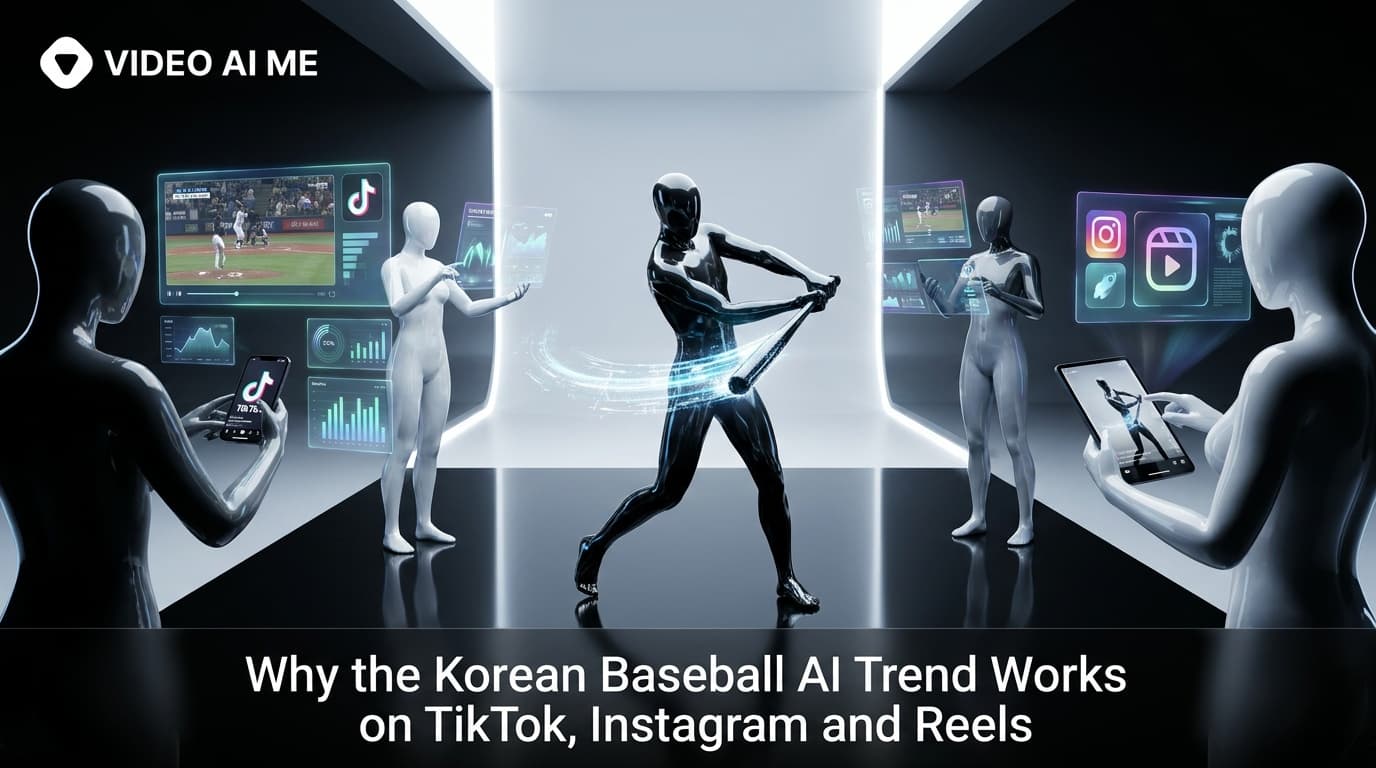
The Question Worth Answering
The Korean baseball AI trend went viral on TikTok, Instagram and Reels almost simultaneously. That kind of cross-platform synchrony is rare. Most viral formats land on one platform and bleed slowly into the others. This one lit up everywhere within a week.
The reason matters. If you understand why the trend hit every major platform's algorithm at the same time, you can apply the same logic to the next trend before it breaks. This post unpacks the mechanics platform by platform and lays out what creators should copy.
The Four Algorithm Levers Every Platform Shares
TikTok, Instagram Reels and YouTube Shorts use different ranking systems, but they all weight roughly the same four signals heavily.
Completion rate. Did viewers watch the entire clip without swiping away? Short clips have a structural advantage because they are easier to finish.
Replay rate. Did viewers loop the clip after the first view? Distinctive visual aesthetics and surprising endings drive replays.
Engagement velocity. How quickly did the early audience interact with the clip? Likes, comments and shares in the first hour weigh disproportionately.
Remix and participation density. How many creators are producing variations of the format? Algorithms favor formats that generate more content for them to push.
The Korean baseball AI trend hits all four levers. That is why it went viral everywhere at once.
Why It Hits Completion Rate
The canonical AI Korean baseball clip is five seconds long. That length sits inside the auto-play window on every major platform.
A five-second clip plays once, loops automatically into a second play, and often loops a third time before the viewer decides whether to swipe. Each completed loop counts as a watch, which boosts completion rate dramatically. The algorithm interprets the resulting signal as strong viewer interest and surfaces the clip to more accounts.
Longer clips struggle here. A 30-second video has to earn the viewer's continued attention for six times as long before the same signal accumulates. The five-second AI broadcast clip gets the algorithmic credit cheaply.
Why It Hits Replay Rate
The broadcast aesthetic is unusual enough to stop the scroll. Most short-form video on TikTok and Reels is selfie-framed, well-lit and obviously made for the camera. The AI Korean baseball trend looks completely different: a press-box angle, scoreboard graphics, compression noise and stadium ambience.
That visual contrast drives replays. Viewers want to look closer at the unfamiliar composition. They want to read the scoreboard. They want to spot the AI tells. Each replay reinforces the algorithm's belief that the clip is high quality.
This is part of why the Stadium Goddess clip cleared 8 million views. Many of those views were repeat views from the same viewers looking for the AI giveaway. We unpack the detection side in the real vs AI fan cam guide.
Why It Hits Engagement Velocity
The trend's early breakout came from creators who already had audiences. @somdattaaa and @thisenola did not start from zero. Their existing followers seeded the first hour of engagement, which triggered the algorithmic flywheel.
Beyond that, the format's novelty drove unusually high comment engagement. Viewers wanted to ask if it was real, request the prompt, tag friends and debate the AI tells. Comment activity weighs heavily in early ranking signals.
This is a useful lesson for any creator. Trends that prompt natural questions in the comment section accumulate engagement signals faster than trends that just look pretty. Build clips that make people want to ask something.
Why It Hits Participation Density
The AI Korean baseball trend was prompt-shared aggressively from the first viral clip. By May 12, 2026, prompt recipes were circulating on Reddit, X, Reels and TikTok comment sections. Anyone with a phone could produce a variation within an hour.
Low participation friction is rocket fuel for an algorithm. Once thousands of creators are producing the same format, the algorithm has an obligation to surface those clips because the engagement on each one validates the format. Participation density compounds.
The trend's structure made it ridiculously easy to remix. Same broadcast frame, swap the subject. Same prompt, change the wardrobe. Same aesthetic, change the sport. Variation cost almost nothing.
How Each Platform Treated the Trend
While the four levers apply everywhere, each platform handled the trend with its own character.
TikTok
TikTok rewarded remix energy. Creators stacked AI clips against real KBO footage, added commentary, layered audio reactions and built duet chains. The platform's tools made it easy to riff on top of existing clips, which amplified the participation density advantage. TikTok creators also caught the format's spread to other sports first, pushing variations across NBA, F1 and concert footage by mid-May.
Instagram Reels
Reels was where the international breakout happened. The format's high production value and broadcast aesthetic fit Reels' visual culture better than TikTok's more casual tone. @somdattaaa and @thisenola both hit six-figure likes there. Reels also rewarded the original AI Korean baseball aesthetic more than the remix versions, which gave the format a longer pure-form lifespan there than on TikTok.
YouTube Shorts
Shorts caught the trail end of the trend. The platform's algorithm rewards channel consistency more than format novelty, so creators who already published Shorts regularly saw the most lift from adding KBO fan cam style clips to their rotation. Shorts is a useful repurposing destination rather than a launch platform for trends of this type.
X (Twitter)
X is where the Stadium Goddess clip first detonated and where the AI exposure also happened. The platform's combination of fast share velocity and crowdsourced fact-checking made it both the launchpad and the unmasking ground. The trend played out faster on X than anywhere else, with both the high and the low news beats happening within a week.
What Creators Should Copy
If you want to use the same algorithmic logic for your own content, copy these patterns.
Keep it short. Five to seven seconds is the sweet spot. Resist the urge to extend.
Choose a distinctive aesthetic. The KBO broadcast look works because it stands out against typical short-form video. Find your own equivalent.
Make commenting irresistible. Build clips that prompt natural questions, debates or requests for the prompt. Comment activity drives algorithmic lift.
Lower participation friction. Share your prompts. Make it easy for others to remix. Participation density compounds.
Post across all four platforms. Same clip, four destinations, within the same hour. Cross-platform velocity reinforces algorithmic lift on each side.
This is exactly why a dual-format workflow matters. If your clip exists only in 9:16, you can post to Reels, TikTok and Shorts but not YouTube horizontal or your blog. If it exists only in 16:9, you lose the three biggest short-form platforms. Native dual export across 16:9 and 9:16 from a single generation is the workflow shape that wins.
VIDEO AI ME is built around that workflow specifically. Build an AI actor once. Generate dual-format clips in one pass. Publish to all four platforms within an hour. That is the cadence the algorithms reward.
Why Distribution Speed Matters More Than Production Polish
Look at the breakout clips from the AI Korean baseball trend. They are not technical masterpieces. The Stadium Goddess clip had warped phones and an impossible scoreboard. The @akita_hooligan dog clip was visually clean but conceptually simple. None of these were extraordinary technical achievements.
What made them viral was timing and distribution. Posted during the format's breakout phase, with engaged audiences ready to seed early engagement, across platforms calibrated to push exactly this kind of content.
The creator who posts a slightly-better clip three days late will lose to the creator who posts a slightly-worse clip in the breakout window. Tempo beats polish during a trend.
We walk through the full breakout timeline in the trend timeline post.
Beyond One Viral Trend
The AI Korean baseball trend will cool. The four-lever framework will not. The next trend that hits short duration, distinctive aesthetic, low participation friction and broadcast credibility will behave the same way.
Do not stop at this trend. Use it as a training ground for understanding what the algorithms reward. Build a workflow that lets you respond to the next format within hours, not days. Same AI actor, same publishing cadence, same dual-format export.
The creators who turn the AI Korean baseball trend into a long-term gain are the ones who internalize the algorithmic mechanics, not just the aesthetic. The mechanics travel. The aesthetics do not.
A Working Cadence to Try
If you want to test the framework on your own content, a useful starting cadence looks like this.
- One clip per day. Five to seven seconds.
- Same AI actor across every clip so your audience can recognize you.
- One distinctive aesthetic per week. Switch when engagement plateaus.
- Dual-format export in 16:9 and 9:16 from a single generation.
- Post to TikTok, Reels, Shorts and YouTube horizontal within the same hour.
- Track which platform delivers the most saves and shares. Double down there.
This is the rhythm the algorithms reward. The AI Korean baseball trend was just one beat inside this rhythm. The cadence is the asset.
Try It on a Workflow Built for Tempo
Try a free generation on VIDEO AI ME and see if the workflow can match the tempo your algorithms reward. The Korean baseball AI trend is a great place to start. The next trend is already loading.
Frequently Asked Questions
Share
AI Summary

Paul Grisel
Paul Grisel is the founder of VIDEOAI.ME, dedicated to empowering creators and entrepreneurs with innovative AI-powered video solutions.
@grsl_frReady to Create Professional AI Videos?
Join thousands of entrepreneurs and creators who use VIDEO AI ME to produce stunning videos in minutes, not hours.
- Create professional videos in under 5 minutes
- No video skills experience required, No camera needed
- Hyper-realistic actors that look and sound like real people
Get your first video in minutes
Related Articles
MiniMax H3 UGC Prompt Templates for Ad Creative
Reusable UGC prompt templates with the variables marked, so you can produce a whole batch of creator style ads by swapping four fields.
Seedance 2.5 UGC Prompt Templates for Ads
Six fill in the blank UGC prompt templates for Seedance 2.5, each with a fully filled worked example, plus how to direct dialogue when the audio is generated.
How to Make AI UGC Videos With Seedance 2.5
A five step playbook for creator style UGC clips with Seedance 2.5: casting, prompts that carry the spoken hook, reference images for batches, and the credit math.